Articles in this Volume

Research Article Open Access
Ethical Embedding and Institutional Reconstruction of Intellectual Property Governance for Generative Artificial Intelligence
Generative artificial intelligence poses systematic challenges to the traditional human-centrism-based intellectual property system in two dimensions: the fair use of training data and the copyrightability of generated content. It exposes the deep ethical tension between technological innovation and the protection of creators' rights and interests. Adopting a functionalist comparative law approach, this paper systematically analyzes the differentiated regulatory paths regarding the use of AI training data and the copyrightability of generated content in the United States, the United Kingdom, Japan and China. Combined with utilitarian incentive theory and personality right ethics, it explores the ethical limitations of paradigms such as the Absolute Control Doctrine and the Substantial Contribution Doctrine in terms of transparency, fairness and liability attribution. By establishing the theoretical benchmark of "creativity ecosystem integrity", this paper constructs a hierarchical consent mechanism, an ethical review system for copyrightability, as well as an ethical insurance and risk-sharing mechanism. It aims to achieve a dynamic balance between ensuring fair participation of human creators in value distribution and promoting technological innovation, and form a normative framework for global artificial intelligence intellectual property governance.
Show more
Read Article PDF
Cite
Research Article Open Access
The Legal Boundaries between Freedom of Expression and Trademark Infringement: An Analysis of the U.S. Rogers Test
The inherent tension between trademark rights and freedom of expression presents a persistent challenge in intellectual property law. This paper examines this conflict within the U.S. legal framework, further investigating the pivotal Rogers test established to balance trademark protection under the Lanhm Act with First Amendment speech guarantees. Through a literature review and case analysis, the study analyzes the test's application and evolution, particularly in cases involving parody and social commentary, and contrasts the U.S. approach with those of EU and the UK. The findings shows that while the Rogers test provides crucial protection for expressive works, its application is not absolute and faces significant limits when a trademark is used as a source identifier, as clarified by the Supreme Court's recent decision inJack Daniel's v. VIP Products.The paper concludes that achieving a precise, context-sensitive balance remains essential for the future development of trademark law in a rapidly evolving communicative landscape.
Show more
Read Article PDF
Cite
Research Article Open Access
Stability of Load-Velocity Relationship in Bench Press Among Male College Students
Article thumbnail
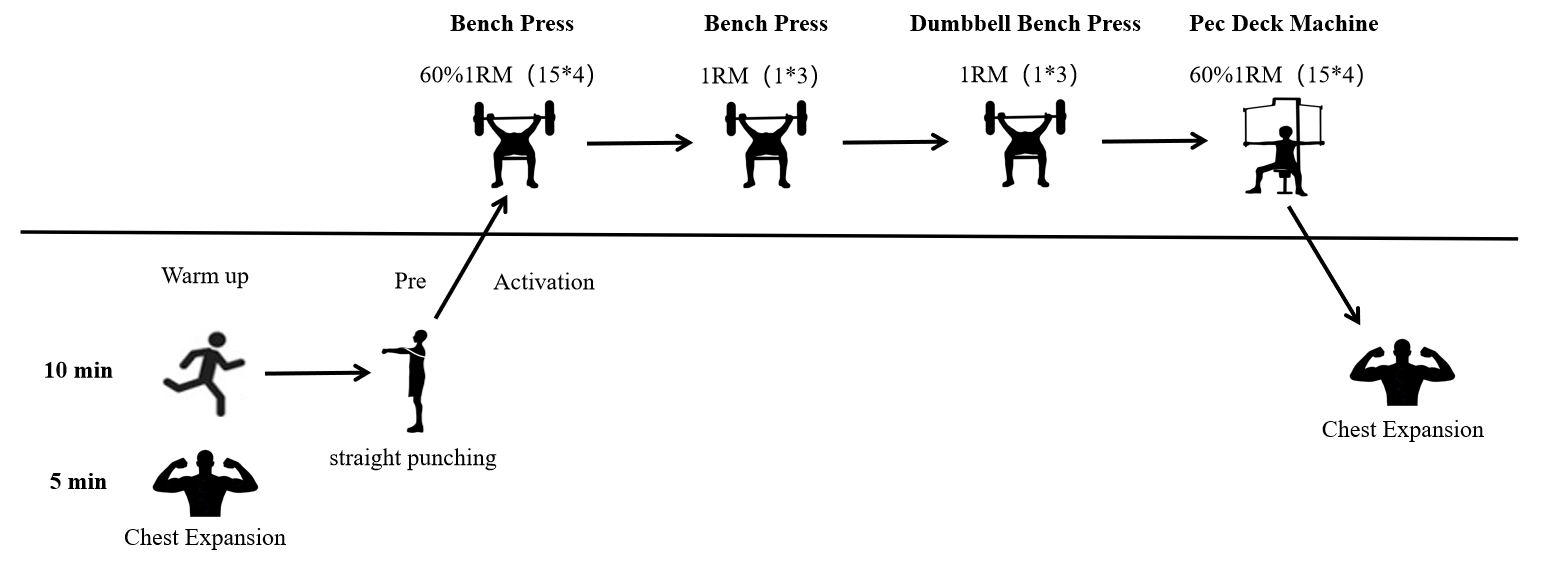
In recent years, velocity-based training(VBT) has garnered growing attention as a novel method due to its ability of track training loads with greater precision and effective training outcomes assessment. The central mechanism of VBT relies on velocity data recorded during movement to assess, adjust and control the training load. 68 male college athletes from the seven sports were chosen as the subjects of this study. After 12 weeks of a strong-training plan, it was hoped that changes would occur in the Load-Velocity relationship of the bench press before and after the program. A German Eonde Pro device was employed to measure the speed of the barbell. Equations for the linear regression of MV, MPV and PV were developed in Origin2024. To compare the above indices for people at different levels of strength, SPSS was employed. Analysis of the speed of different loads for barbells shows that MV, MPV, PV and load are negatively correlated, and no significant differences in movement speed were found among the sports. After 12 weeks of strengthening exercises, the upper-body strength of all 68 people increased substantially; however, the mean values of MV, MPV and PV were not very different. ANOVA was employed to compare the means of MV, MPV, and PV among the seven sports; that is to say, no single sport consistently outperformed the others in all three velocity indicators. The stability of the load-velocity relationship for the bench press in different sports, strength levels and after organised strength training were all verified in the study. The above results can provide a scientific basis for the construction of strength training programs for athletes of various sports.
Show more
Read Article PDF
Cite