Articles in this Volume

Research Article Open Access
Delusion Persistence in Schizophrenia: A Cross-Theoretical Integration of Cognitive, Psychodynamic, and Predictive Processing Models
Article thumbnail
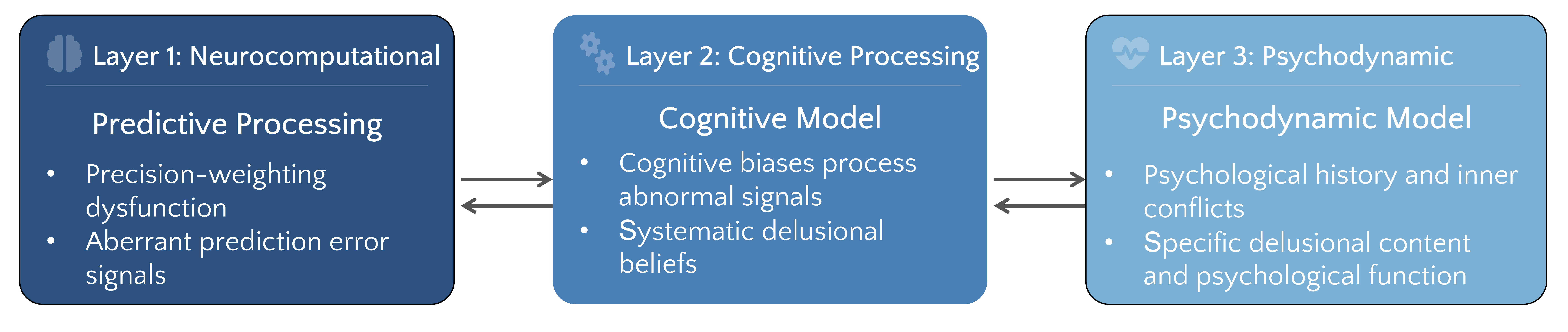
Schizophrenia affects about 23 million people around the world. As one of its core positive symptoms, delusions are characterized by the fact that they cannot be easily corrected in the face of counter-evidence, which has become a difficult point for clinical intervention. Different theoretical schools have put forward systematic explanations of the formation and maintenance of delusions from their own perspectives, but there is a lack of sufficient cross-comparison and integration between these theories. This paper adopts the methods of narrative literature review and cross-theoretical comparison to carry out a systematic analysis from the three theoretical perspectives of the cognitive model, the psychodynamic model and the predictive processing model. The cognitive model emphasizes the role of interpretive bias and attention bias, the psychodynamic model focuses on the function of externalization and defense mechanisms of internal conflict, and the predictive processing model explains delusions from the perspective of an imbalance in the precision weighting of prediction errors. The three theories are different in their levels of interpretation, but they are complementary at the level of the interaction between cognition and experience. The integrated framework proposed in this article suggests that future research should promote the understanding of delusions from a multi-level and multi-method perspective. Clinical intervention should integrate cognitive-behavioral techniques and relational treatment strategies, and optimize individualized intervention plans with the help of computational models.
Show more
Read Article PDF
Cite
Research Article Open Access
Prediction of Olympic Gold Medalists Based on Machine Learning: A Comparative Study of Classification Models
Article thumbnail
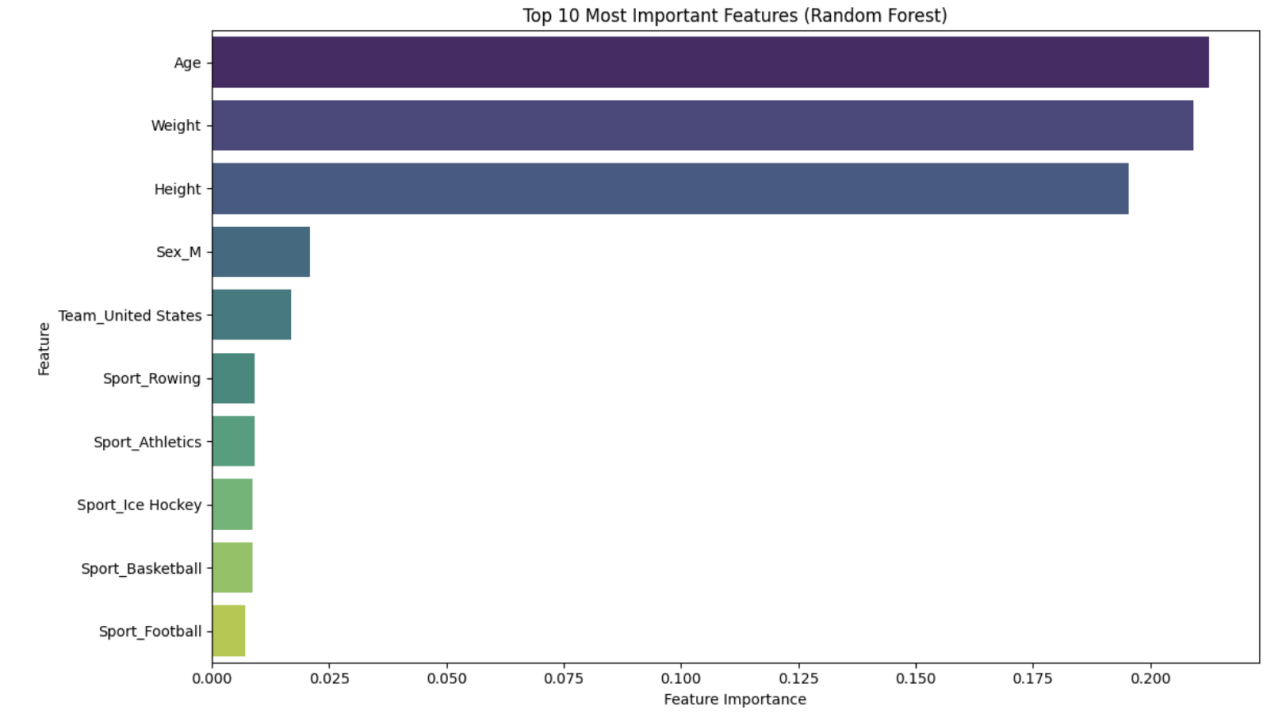
The main purpose of this study is to explore the factors that contribute to professional athletes winning gold medals at the Olympic Games. Given the global attention paid to the achievements of previous Olympic Games and the national focus on the cultivation of Olympic athletes and their medal situations, it is of significant analytical value to understand the differences between Olympic gold medalists and other medalists. This study will utilize the 120 Years of Olympic Athletes Dataset and obtain the basic data of Olympic athletes from it to construct a prediction model and identify the key factors influencing gold medal awards. The research structure indicates that the optimal physiological condition is usually associated with the optimal age group, and the optimal physiological condition will have a crucial impact on the competitive level of top athletes. Although machine learning models can effectively identify the success factors of top athletes, the absence of some athlete features and potential sample bias make the overall situation limited. Overall, this study demonstrates that predictive models can provide reliable predictive capabilities for sports analysis and help understand measurable athlete characteristics related to medal competition in the Olympics and other different events.
Show more
Read Article PDF
Cite
Research Article Open Access
Emotional Safety and Academic Motivation in Student Narrative Writing
Narrative writing is when students transform their personal experiences, emotions and memories into written form. This study explores how emotional experiences shape the academic motivation of narrative writing, with a particular focus on risk, writing engagement, and narrative depth. This study adopted a self-ethnographic narrative inquiry design to analyze the reflective comments on three narrative poems written by students. The focus of the analysis is on repetitive emotional images and reflections related to anxiety, safety, cultural memory, sense of belonging and students' voices. The research results show that emotional instability is detrimental to students' willingness to disclose their personal experiences. Anxiety may coexist with persistence, but it can reduce the depth of expression. In contrast, cultural memory and identity can enhance motivation by making writing feel more meaningful. This study holds that the motivation for narrative writing should be understood as a relational and emotional process, rather than merely a personal trait or skill. These findings suggest that teachers can express deeper narrative writing by establishing emotional security, providing reaction-oriented feedback, and valuing students' cultural memory and identity.
Show more
Read Article PDF
Cite