Articles in this Volume

Research Article Open Access
Stigmatizing Labels, Peer Conformity, and Campus Group Exclusion: A Review of the Mechanisms of Identity-Based Bullying
Article thumbnail
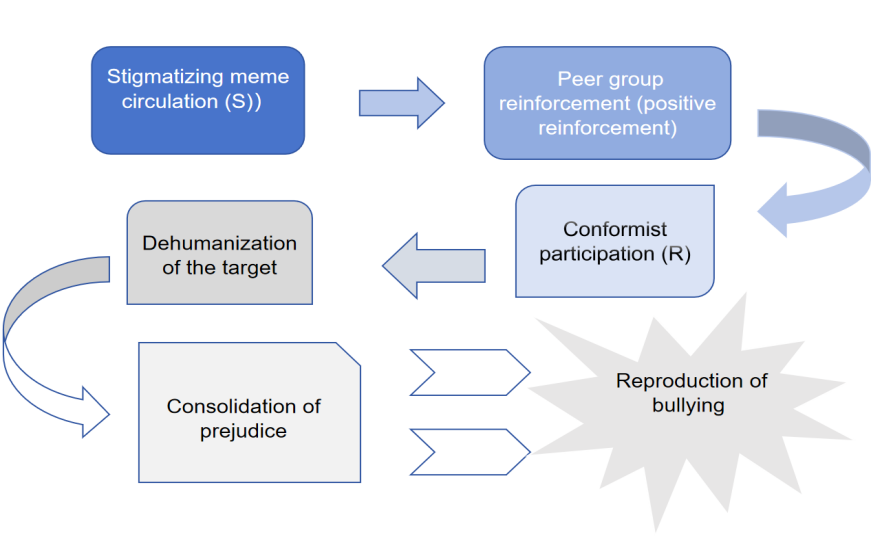
The exclusion and bullying targeting minority groups--including sexual minorities, individuals with disabilities, and orphans--have become observable social phenomena in Chinese campus settings. This review examines, from a social psychological perspective, how the herd effect operates within physical campus environments to trigger, amplify, and consolidate prejudice and discrimination held by majority groups toward minority students. Adopting a literature review methodology, this paper synthesizes Asch's conformity experiments, behaviorist theory, Freudian individual unconscious, Jungian collective unconscious, and empirical studies on school bullying and peer conformity published over the past two decades. The central argument proposes a "three-tiered ladder" through which the herd effect function: first, linguistic stigmatization transforms neutral identity labels such as "gay" and" Tang"(a colloquial abbreviation for Down Syndrome in Chinese, used similarly to offensive slurs like "mong" in English) into tools of humiliation; second, social isolation dismantles the victim's support network; and third, peer pressure escalates into physical violence and property damage. This mechanism is significantly amplified within the Chinese collectivist educational context, where the physical inseparability of fixed-class systems extends conformity pressure from temporary behavior into chronic survival anxiety.
Show more
Read Article PDF
Cite
Research Article Open Access
Social Structural Pressures and East Asian Adolescents' Consumption Behaviors Toward Virtual Anime-Style Characters: The Mediating Role of Parasocial Attachment
East Asian adolescents face multiple structural stressors, including academic pressure, peer competition, parental expectations, and uncertainty about the future. When these pressures frustrate their basic psychological needs, some turn to virtual anime-style games for emotional compensation, forming parasocial attachments to virtual characters. Integrating compensatory consumption theory and parasocial relationship theory, this paper synthesizes existing literature to construct an analytical pathway from structural social stress through psychological need deficits and parasocial attachment to consumption behavior. The analysis suggests that when academic competition and family expectations leave adolescents' needs for belongingness and competence unfulfilled, their emotional involvement with virtual characters accelerates from casual contact toward attachment; once attachment is formed, consumption becomes a natural extension of maintaining and expressing the relationship, manifested both in the general logic of paying for parasocial proximity and in possessiveness-driven consumption that transforms intangible bonds into tangible possessions. Moreover, the developmental asynchrony between the socioemotional system and the cognitive control system during adolescence further heightens adolescents' susceptibility to immediate rewards in gaming contexts. By integrating compensatory consumption theory and parasocial relationship theory within the novel context of anime-style virtual games, this study extends the application boundaries of both frameworks, and suggests that parents and schools should attend to the real-world satisfaction of adolescents' needs for autonomy, competence, and belonging rather than merely restricting gaming time and spending.
Show more
Read Article PDF
Cite
Research Article Open Access
Generative AI Use and Critical Thinking among University Students
How students use artificial intelligence and what they learn from it cannot be ignored. According to how often people use AI tools, the groups were divided, and then descriptive statistics, Welch's ANOVA test and independent-sample t-tests were carried out to compare the critical-thinking scores of these groups. Based on the above description, the mean critical-thinking scores of the four groups using AI are relatively high. However, Welch's ANOVA showed that there were no significant differences among the four groups (F(3, 24.71) = 1.586, p = .218). The two groups were divided into regular and non-regular AI users; the mean critical-thinking scores of the regular-use group (50.06) and the non-regular-use group (45.42) were significantly higher for the regular-use group; t(100) = 2.948, p = .004, and Cohen's d = .750. Based on the above results, the impact of AI on students' critical thinking ability is not straightforward; it may vary according to how they use AI. AI can help students learn better by learning to think independently; however, if they rely on AI too much, they may not develop their own thinking skills. Given the small sample size, uneven distribution of groups, self-reported data, cross-sectional design, etc., only associations can be concluded from the results and not cause-and-effect relationships.
Show more
Read Article PDF
Cite
Research Article Open Access
The Masking Effect of Rumination on the Relationship Between Short-Video Addiction and Sleep Quality among College Students: A Generalized Mediation Analysis
Article thumbnail
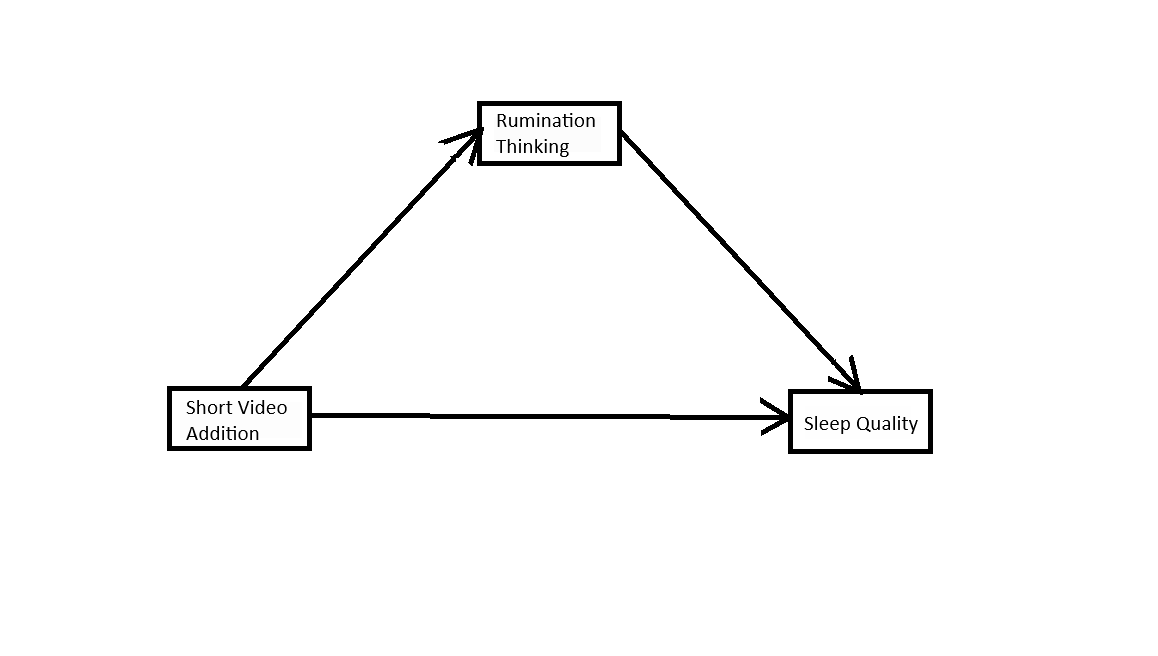
Objective: The impact of short video addiction on sleep quality among college students has been debated, yet the cognitive mechanisms remain obscure, and the mediating function of rumination is yet to be validated. Methods: According to the response style theory, this research recruited 103 college students as subjects and employed the short video addiction scale, rumination scale, and Pittsburgh Sleep Quality Index (PSQI) to examine the mediating effect via the bootstrap method. Results: Short video addiction showed a highly positive association with rumination (r=0.379), whereas rumination exhibited a similarly robust positive association with sleep quality (r=0.300), where the indirect impact was manifest (effect value 0.0237, 95% CI excluding 0), whereas the direct impact was not significant, suggesting that rumination performed a complete intermediary function (masking effect). Conclusion: Short video addiction indirectly deteriorates sleep quality via inducing rumination, uncovering the underlying pathway of "behavior → cognition → physiology", and offering cognitive targets for psychological intervention within universities.
Show more
Read Article PDF
Cite
Research Article Open Access
Academic Self-Efficacy, Family Socioeconomic Status, and Language Learning Motivation: Mechanisms and Intervention Pathways
From the perspective of educational psychology, this paper will explore the ways in which academic self-efficacy and family socioeconomic status (SES) jointly influence the motivation for language learning. Research has found that the family's SES does not directly affect students' learning motivation; instead, it can raise students' self-efficacy by providing economic resources and transmitting cultural capital, and it may also influence family interaction. Self-efficacy is a necessary condition for students to have stronger and wider motivation to learn Chinese in the four dimensions of goal setting, effort investment, perseverance and strategy modification. Together, these two sets of factors form a chain-like transmission model of "external environment - internal cognition - behavioural motivation". Based on this analysis, the paper proposes attribution training as the main intervention path and believes that by guiding students to attribute their academic failures to controllable process factors, teachers can help them build stable ability beliefs incrementally and promote sustained intrinsic motivation. The paper will also outline the range of application for the intervention measures and multi-tiered support paths to provide practical and feasible educational recommendations for language teaching.
Show more
Read Article PDF
Cite
Research Article Open Access
Research on the Interpretation Competition and Normative Path of Fair and Equitable Treatment Clause from the Perspective of International Investment Arbitration
In the context of profound changes in the geopolitical landscape, many sovereign states have begun to resist the broad interpretation of the Fair and Equitable Treatment (FET) clause, in order to safeguard their regulatory measures in the field of climate governance and public policy. At the same time, emerging issues such as artificial intelligence (AI) and digital assets are challenging the traditional definition of investment under international investment law. Whether the host country's regulatory measures violate the reasonable expectations of investors has also generated long-term uncertainty. This paper uses the methods of literature analysis, comparative analysis and inductive analysis to sort out the international investment agreements and related arbitration practices, and analyzes the game of interpretation between national regulatory power and investor protection caused by vague provisions. On this basis, it further investigates how to achieve a reasonable balance between investor protection and national regulatory power through rule coordination. The study reveals that the open-ended formulation of the FET clauses is a structural characteristic of international investment law that adapts to the interests of different legal entities, and it is also an important reason for the long-standing differences in its interpretation. Based on this, this paper proposes a governance path from regional practice to multilateral rule coordination, and establishes a more stable and sustainable balance between rule certainty and interpretation diversity by improving the coordination mechanism.
Show more
Read Article PDF
Cite
Research Article Open Access
Cognitive Changes and Brain Structural Plasticity under Long-Term Negative Emotions: Research Progress and Causal Controversies
Depression, fear, and anxiety are typical negative emotions. If these emotions persist for a long time, they can lead to cognitive biases and physical discomfort. Two common clinical subtypes are generalized anxiety disorder (GAD) and major depressive disorder (MDD). Whether these emotions causally affect structural plasticity and neural circuit function—and if so, how—remains an open question. Prior work has combined brain imaging, non-invasive brain stimulation (including Repetitive Transcranial Magnetic Stimulation), and drug intervention data to map the structural and circuit changes linked to different negative emotions. The prefrontal-amygdala circuit appears central to negative emotion processing, yet the brain changes linked to depression, anxiety, and fear differ. Because cross-sectional studies capture only one time point, they cannot resolve causality—brain abnormalities may be pre-existing traits, or they may emerge secondarily from persistent emotions. Non-invasive brain stimulation and pharmacological interventions can modulate neural circuits, which supports their potential as interventions. A single scan gives only a snapshot. It cannot show whether negative emotions reshape the brain over time, or whether pre-existing brain features shape those emotions. Longitudinal tracking of the same individuals across multiple time points, with control groups for comparison, would help clarify it.
Show more
Read Article PDF
Cite
Research Article Open Access
Protection of the Rights of Children Affected by Domestic Violence in China
Child domestic violence remains a significant challenge in China, where many cases fail to receive timely protection despite the establishment of legal mechanisms such as mandatory reporting and personal safety protection orders. The major problem is not merely the existence of abuse, but the gap between legal recognition and effective intervention caused by uncertainty about certain forms of domestic violence, uneven implementation of reporting responsibilities, insufficient professional training, inadequate public awareness, and weak institutional coordination. This article examines the deficiencies of China's child protection framework through legislative, public awareness, enforcement, and judicial perspectives, using comparative analysis of child protection systems in selected European countries. Based on these comparisons, this article proposes three targeted reforms. First, China should establish a graduated accountability mechanism for failure to fulfil mandatory reporting obligations. Second, compulsory training programmes should be introduced for relevant individuals and bodies to improve early identification, evidence preservation, and trauma-informed responses. Third, China should strengthen institutional coordination by developing a national child domestic violence database and integrating protection mechanisms into the existing 110 emergency system. These reforms aim to transform China's current reactive protection model towards a preventive model, strengthening accountability, and ensuring more effective protection of children's rights.
Show more
Read Article PDF
Cite