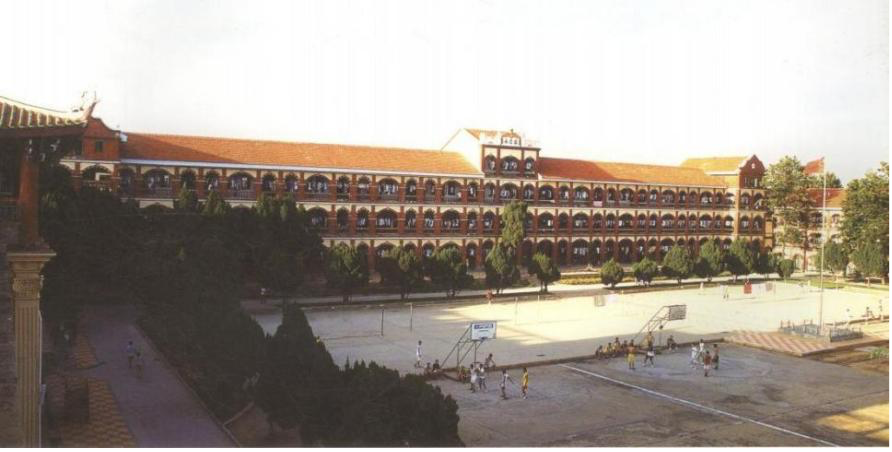
Campus place spirit is the core carrier that nourishes campus cultural identity and emotional connection. Its essence lies in using spatial design and cultural symbols to make teachers and students feel a sense of direction, identity and belonging. This paper takes the campus landscape of Jiaqing style in Jimei University, Xiamen City, Fujian Province, China as the research object, and based on the theory of place spirit, explores how the Jiaqing architectural complex constructs a unique campus cultural field from the three dimensions of historical context, regional characteristics and spatial functions. The research finds that the Jiaqing style buildings, relying on the design language of combining Chinese and Western elements, the adoption of traditional materials from southern Fujian, and the integration of function and aesthetics, not only inherit Chen Jiaqing's concept of "education for national rejuvenation", but also achieve the contemporary relevance of place spirit through modern technological innovation. This study provides theoretical support and practical reference directions for the cultural inheritance and innovative design of university campus landscapes.