Articles in this Volume

Research Article Open Access
The Application of Task-Based Language Teaching in Junior High School English Reading-Taking Unit 1 of the Shanghai Education Edition Grade 7 as an Example-Friendship
For decades, Task-Based Language Teaching (TBLT) has been applied in English reading for junior high school students. TBLT is distinctive from traditional teaching method, brings numerous design challenges for teachers. Research has shown that TBLT significantly improves students' motivation and agency in English reading learning. However, TBLT has been insufficiently studied in the field of English reading for junior high school students. The purpose of this qualitative case study is to explore the effects of TBLT on students' attitudes toward English reading, such as their reading motivation and reading confidence. The duration of the research lasts for approximately four months. The two-round semi-structured interviews are conducted with five English teachers and 30 students of different English proficiency in Grade 7 from the same school, each every two months. The data are recorded and analyzed carefully by the researcher. The results indicate that participants' attitudes towards English reading have been improved considerably after the implementation of TBLT compared with their conventional pedagogy.
Show more
Read Article PDF
Cite
Research Article Open Access
Generative AI Tools for Performance Assessment of University Students: Effects, Challenges, and Countermeasures
Against the backdrop of educational evaluation reform, Generative Artificial Intelligence (GAI) has been increasingly applied to performance assessment, yet its actual effects and challenges remain underexplored. This study surveyed 50 undergraduate students to examine their perceptions of GAI-based performance assessment across five dimensions: evaluation efficiency and feedback timeliness, accuracy and fairness, appropriateness of scoring criteria and weight distribution, stability and trust, and deep learning and innovation. Results show that over 70% of respondents recognized GAI's advantages in scoring speed and feedback timeliness, and most regarded its scoring criteria as clear and consistent. However, nearly 75% believed GAI failed to identify innovative highlights, over 70% perceived a tendency to emphasize form over content, and 44% reported that such preferences constrained their creative expression. Respondents also raised concerns about incorrect information, technical instability, and the lack of emotional interaction compared with human evaluation. These findings suggest that GAI should act as an auxiliary tool rather than a full replacement for teacher evaluation. To address current limitations, it is necessary to improve GAI's deep evaluation and fact-checking capabilities, establish human-machine collaborative review mechanisms, and cultivate students' critical thinking. This study provides implications for integrating GAI into university performance assessment.
Show more
Read Article PDF
Cite
Research Article Open Access
Application, Risks, and Prospects of Generative Artificial Intelligence in Education: A Case Study of DeepSeek
The generative AI (GAI) technology represented by DeepSeek is developing rapidly and gradually entering the field of education. However, systematic examination of its applicability in education remains limited. Drawing on risk theory and human-computer collaboration theory, this study conducts a systematic review of the literature on DeepSeek's current educational applications. It analyzes the positive effects of DeepSeek in three dimensions: students, teachers, and classrooms, including supporting cognitive training, reducing teachers' repetitive workload, and facilitating contextualized knowledge construction. At the same time, its application entails potential risks such as educational data leakage, misinformation caused by algorithmic hallucination, the digital divide, threats to academic integrity, and weakened teacher roles. The study concludes that DeepSeek should be positioned as an auxiliary cognitive tool in education rather than a replacement for human teaching. Accordingly, recommendations are proposed at three levels: institutional data governance and privacy protection, technical improvement of algorithmic transparency, and educational evaluation reform and critical digital literacy cultivation.
Show more
Read Article PDF
Cite
Research Article Open Access
A Study on the Urban-Rural Disparity in Educational Resource Allocation for Primary and Secondary Schools
Allocation of educational resources affects the learning environment and equality of opportunity for students. Frontline teachers' views on the urban-rural disparity in educational resources for Chinese primary and secondary schools are investigated in this study. An exploratory comparative design was used, and based on questionnaire responses from 26 teachers, six were from urban schools and twenty were from rural or township schools. Teacher staffing and qualifications, school facilities, digital resources, curriculum implementation, professional development, family cooperation, funding and policy execution were also analysed. Therefore, the deficiencies in urban and rural areas cannot be confined to primary and secondary school facilities. Rural teachers reported more restrictions in specialist staffing, professional development, curriculum provision, digital resources, family support and the actual implementation of educational balancing policies. Teachers in both groups also listed the recruitment, training and retention of teachers as problems. Therefore, in addition to the supply of resources, schools need to have the ability to use and maintain these resources effectively for educational equity. Due to the small and unequal sample and the reliance on self-reported data, the findings should be interpreted as exploratory. Future research should use larger samples and combine teacher perspectives with student, school, and longitudinal data to further examine how resource allocation affects educational opportunities.
Show more
Read Article PDF
Cite
Research Article Open Access
Generative Artificial Intelligence-Assisted Language Learning: Cognitive Mechanisms, Theoretical Tensions, and Ethical Governance
Article thumbnail
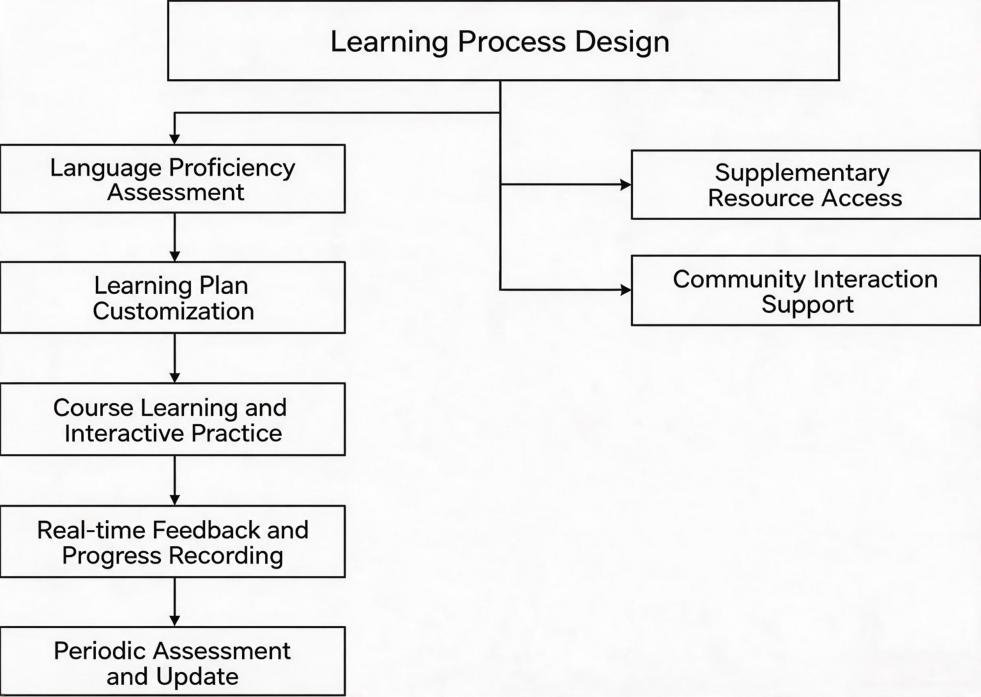
Generative artificial intelligence (AI) is changing the environment of language learning, but its theoretical basis and ethical boundaries have not been fully explored. This paper builds a multi-level analytical system for AI-assisted language learning based on cognitive load theory, the zone of proximal development, generative linguistics and the technology acceptance model. AI can help students learn better by reducing extraneous cognitive load and providing easy-to-access support and instant correction; however, due to technological limitations, it may also reduce students' sense of ability and self-management. Generative linguistics and generative AI are not in opposition; rather, the former advocates for data frugality and innate mechanisms, while the latter is characterized by data maximalism and statistical learning; they are in harmony at the level of third factors and the Minimalist Program. According to the above research, chatbots have shown a modest positive effect on language learning; this degree varies depending on the learner's level, interface Design, interaction characteristics, etc. Based on the above, this paper introduces a "Smart Chinese" collaborative learning plugin that integrates ChatGPT with special scaffolding tools for assessment, planning, practice, feedback and community support. Finally, it presents the ethical problems of algorithmic bias, data privacy, over-reliance, and educational gaps, and proposes a multi-level governance system at the institutional, technological and pedagogical levels.
Show more
Read Article PDF
Cite
Research Article Open Access
How Does the Relationship Between Elite Youth Sports Participation and Post-Secondary Enrollment Vary Across Different Races and Ethnicities in Canada?
Elite youth sport is often described as a pathway to university, scholarships, and future opportunity, but access to that pathway is not equal for every athlete. This paper asks: How do race, ethnicity, and socioeconomic factors shape the relationship between elite youth sport participation and post-secondary opportunities in Canada? To investigate this question, this paper employs a qualitative case study using two in-depth, one-on-one interviews with elite youth athletes from soccer and hockey. Their experiences were compared with existing Canadian research on sport participation, financial barriers, discrimination, family support, and recruitment knowledge. The interviews suggest that race was not the most visible barrier in either athlete's personal experience, although both accounts leave open the possibility of less obvious forms of racial bias. Instead, socioeconomic status, family resources, recruitment knowledge, and personal connections appeared to have a stronger direct influence on access to elite development and post-secondary opportunities. In short, elite sport can create educational opportunities, but access to and benefit from those opportunities depend on more than athletic talent alone.
Show more
Read Article PDF
Cite
Research Article Open Access
Exploring the Role of Generative Artificial Intelligence as a "Learning Scaffold" in Junior High School Students' Self-Regulated Learning
As digital technology becomes more deeply embedded in education, Generative Artificial Intelligence (GenAI) is increasingly present in junior high school students' daily learning. This paper explores the "scaffolding" role of GenAI in students' self-regulated learning (SRL) and its possible influence on enhancing academic self-efficacy. Based on Zimmerman's cyclical phase model of SRL and learning scaffolding theory, the study systematically deduces the human-AI interaction process. The analysis suggests that GenAI acts as planning, monitoring, and reflective feedback scaffolds across the forethought, performance, and self-reflection phases, effectively addressing the lack of personalized support in traditional autonomous learning. Furthermore, GenAI assistance contributes to the internalization of academic self-efficacy by accumulating direct mastery experiences and alleviating trial-and-error anxiety. Acknowledging the potential risks of cognitive offloading and academic misconduct associated with GenAI dependency, the paper proposes coping strategies such as cultivating students' critical GenAI literacy and implementing dynamic scaffold fading. This research provides theoretical support and practical guidance for educators to optimize GenAI-assisted self-regulated learning environments.
Show more
Read Article PDF
Cite
Research Article Open Access
How Do Different Parenting Styles Influence Self-Regulated Learning: A Literature Review in the East Asian Cultural Context
This literature review examines how authoritative, authoritarian, and neglectful parenting styles may influence students' self-regulated learning (SRL) in Chinese families within the broader East Asian cultural context. Drawing on research on parenting styles and SRL, the review synthesises evidence concerning parental autonomy support, emotional responsiveness, behavioural control, parent–child relationships, motivation, self-efficacy, academic engagement, and learning-management behaviours. The reviewed literature suggests that authoritative parenting is generally associated with conditions supportive of SRL because it combines clear expectations with emotional support and opportunities for autonomy. Authoritarian parenting may provide external structure and support academic compliance, but strong control can restrict opportunities for students to internalise goals and practise independent regulation. Neglectful parenting may weaken SRL by providing insufficient guidance and emotional resources. This study also identifies the conceptual and methodological gap which is the most of research in China's context examined engagement, motivation, or academic achievement rather than SRL directly. It therefore argues for a gradual transfer of learning responsibility from adults to students and for future longitudinal research using multidimensional measures of SRL across different educational stages.
Show more
Read Article PDF
Cite