
Articles in this Volume

Research Article Open Access
Ethical Dilemmas of Female Fertility under Policy Shifts
Article thumbnail
China’s birth rate has dropped quickly, from 1.6 babies per woman in 2016 to 1.09 in 2023. More women of child‑bearing age are choosing to delay or skip both marriage and motherhood. Fertility is a major issue related to economy, society and family development. Based on care ethics and stakeholder theory, this study explores the ethical dilemmas confronting women under China’s evolving fertility policies, especially Three-Child Policy. Through semi-participant observation and in-depth interviews with ten women of childbearing age, which reveals the reasons from three dimensions, it is found that workplace discrimination, social norms displayed in family field and social-cultural constraints in whole society together lead to the ethical dilemmas of female fertility. This study improves insights of fertility decision from female individuals by arguing that the current policy shifts and design lack of support and social collaboration.This finding suggests that relevant measures are supposed to be taken under policy shifts to better safeguarding women’s reproductive and fair employment rights and enhancing sustainable social development.
Show more
Read Article PDF
Cite
Research Article Open Access
Research on Legal Risks and Protection Mechanisms in Senior Co-Housing Arrangements
Against the backdrop of an increasingly aging population, senior co-housing has become an option chosen by a growing number of elderly people. Thus, this paper examines the legal risks and safeguard mechanisms of senior co-housing. Based on existing literature and relevant legal provisions, it aims to provide an in-depth analysis of the legal risks faced by seniors who choose to co-house and to propose practical safeguard mechanisms suited to China’s context. Through an investigation of the current realities of senior co-housing in China, the study addresses property issues and examines the underlying causes of legal risks involved. The results demonstrate that by integrating international legislative experience in protecting non-marital cohabitation among the elderly with local practice, it is possible to establish a comprehensive safeguard framework that prioritizes contractual arrangements while providing fallback protection through de facto relationship recognition. Furthermore, the study proposes clarifying the separate property principle, refining the identification of shared assets and the valuation of household labor, and developing specific legal measures to address residence and inheritance issues.
Show more
Read Article PDF
Cite
Research Article Open Access
Research on the Copyright Ownership of Works Generated by Artificial Intelligence
With the widespread use of artificial intelligence (AI) in creative fields, the issue of copyright ownership for AI-generated works has become a topic of intense debate. This paper examines the copyright attribution of such works and the associated legal challenges. Current copyright law exhibits substantial deficiencies in addressing AI-generated content, necessitating a re-examination and adjustment of relevant legal provisions. By drawing on literature review, case studies, and comparative legal analysis, this paper investigates how different jurisdictions approach and implement legislation in this area. Besides, it develops a systematic framework for the copyright ownership of AI-generated content by analyzing established theories, real-world practices, and future trends, aiming to support the evolution of the legal framework. The analysis unequivocally establishes that artificial intelligence lacks legal personhood under copyright law and should be regarded as a creative tool rather than a rights-holding entity. In contrast, users play a decisive role in the creative process through inputting instructions and adjusting parameters. Therefore, copyright ownership of generated works should reasonably be vested in the users who exercise actual control over the creative process, rather than in the AI itself or its developers.
Show more
Read Article PDF
Cite
Research Article Open Access
A Review of Anti-monopoly Cases in China's Platform Economy After 2021
With the rapid development of the digital economy, the monopoly problem of China's platform economy has become increasingly prominent. Since the implementation of the "Anti-Monopoly Guidelines for the Platform Economy" in 2021, China's anti-monopoly law enforcement agencies have investigated and dealt with multiple cases of platform economy enterprises abusing their dominant market positions, including typical cases such as Alibaba, Meituan, China National Knowledge Infrastructure (CNKI), and Ningbo Senpu Information. This article, through the analysis of these cases, discovers that the current law enforcement has problems such as insufficient fines, unclear scope of penalties, and the absence of supervision over foreign-funded enterprises. Furthermore, the post-event supervision model is difficult to effectively prevent monopolistic behaviors and may harm the interests of consumers. To this end, this article suggests raising the upper limit of fines, optimizing the calculation standards of penalties, strengthening the supervision of foreign-funded enterprises, and promoting full-process supervision to enhance the deterrent effect of the law. In the future, it is necessary to further improve the anti-monopoly mechanism for the platform economy and balance the efficiency of law enforcement with market vitality.
Show more
Read Article PDF
Cite
Research Article Open Access
Beyond Borders: Navigating Jurisdictional Conflicts and Choice-of-Law Issues in Trademark Transfers in Cross-Border Mergers and Acquisitions
Cross-border mergers and acquisitions (M&A) often hinge on the seamless transfer of trademark; however, jurisdictional conflicts and divergent choice-of-law regimes could disrupt transactions and expose parties to unforeseen liabilities. This paper examines three primary legal challenges: extraterritorial application of trademark statutes, forum shopping coupled with jurisdictional uncertainty, and divergent substantive trademark regimes. To address these challenges, it proposes three concrete coping strategies: precise contractual drafting and arbitration clauses, pre-closing harmonization combined with risk-allocation tools, and rigorous post-closing monitoring and enforcement protocols. Anchoring the analysis is the Supreme Court’s June decision in Abitron Austria GmbH v. Hetronic International, Inc., which significantly curtailed the Lanham Act’s extraterritorial application and underscored transaction teams’ need to secure local rights in every relevant market. Employing comparative law, model clauses, and doctrinal insights, this paper delivers a structured roadmap to safeguard trademark transfers’ validity and enforceability, long-term protection of trademark transfers across diverse and evolving legal landscapes.
Show more
Read Article PDF
Cite
Research Article Open Access
The Balanced Role of AI Regulatory Sandbox in Innovation Incentives and Competing Safety Values
As artificial intelligence (AI) technologies rapidly penetrate key sectors such as healthcare, education, and public governance, traditional static, ex-post regulatory models can no longer keep pace with the risks and uncertainties arising from their swift evolution. Focusing on the “AI regulatory sandbox,” the study clarifies its institutional logic, evaluates implementation outcomes, and identifies practical challenges, while exploring how the mechanism can balance innovation with the protection of the public interest. Employing a mixed approach of literature review and comparative case analysis, the study indicates that AI regulatory sandboxes provide a legally bounded, real-world environment that enables iterative testing, risk assessment, and rule refinement, thereby accelerating technological innovation and enhancing regulatory agility, and multi-stakeholder collaboration within the sandbox further strengthens the protection of user rights and social safety. Nonetheless, the mechanism remains challenged by major issues, including regulatory capture, inadequate transparency, fragmented cross-border coordination, and limited regulatory resources. As such, it recommends strengthening information disclosure and legal liability frameworks, establishing mechanisms for international mutual recognition and collaborative governance, and directing targeted investment toward regulatory talent and technical infrastructure.
Show more
Read Article PDF
Cite
Research Article Open Access
Logical Layering and Criteria Reconstruction for the Determination of Usurpation of Corporate Opportunities
China's Company Law introduced the rule of corporate opportunity in 2005. The 2024 revision (new Art. 183) refined the rule, yet its language remains loose, giving rise to inconsistent adjudication, intricate tests, and an unbalanced burden of proof. Precisely identifying usurpation is vital to protecting corporate assets and market integrity. This paper discusses a "two-step" logical hierarchical framework based on the doctrine of corporate interest through case analysis and literature research. The framework aims to clarify the elements of the foundation and core layers for the determination of corporate opportunity and the key elements for the characterization of usurpation. The study shows that applying the "two-step" logic expands the scope of subject matter to include controlling shareholders and beneficial owners, and adds "express corporate refusal" as an exception. Although the "two-step" logic needs to be improved, it can reduce the different judgments in the same case, lay the foundation for the formation of guiding cases, and help judicial practice and corporate governance.
Show more
Read Article PDF
Cite
Research Article Open Access
The Rise of the Live Streaming Industry and the Evolution of Relevant Legal Regulations
Article thumbnail
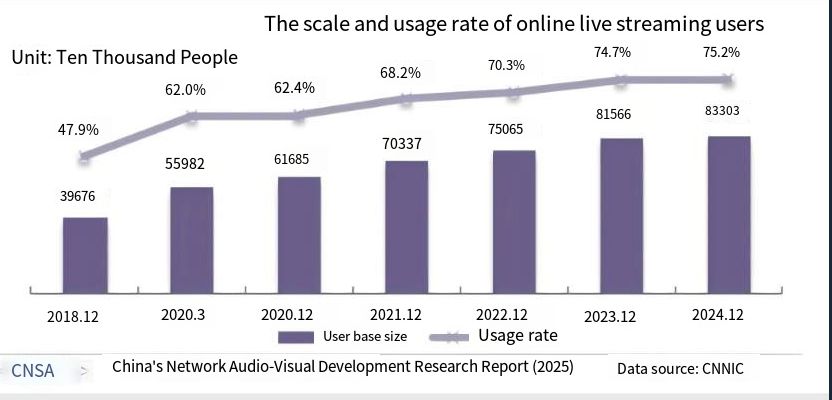
Based on the theoretical framework of legal sociology, this paper explores the interactive relationship between the development of the live streaming industry and its legal regulation. It systematically reviews the industry’s evolution from a regulatory vacuum in its infancy, through the phase of rapid expansion accompanied by administrative intervention, to a stage of standardized development characterized by diversified co-governance. The study analyzes key governance challenges, including vulgar content, blurred subject responsibilities, and the abuse of technology. Through historical analysis and case studies, the paper uncovers a dual logic of legal regulation: on the one hand, targeted legislation such as the Administrative Measures for Online Live Marketing constructs a normative system to address practical issues like false advertising and contractual disputes; on the other hand, industry innovation compels legal transformation, as exemplified by disputes over virtual streamers prompting the delineation of virtual property rights. From the perspective of the "law and society interaction" framework, the study demonstrates the formation of a dynamic “response–adaptation” mechanism: law enforces social control through systems of subject responsibility, while the industry, through technological innovation and interest negotiation, in turn promotes legal refinement. The paper proposes a governance framework comprising “specialized legislation + technological regulation + diversified co-governance,” offering a paradigm reference for the legal construction of emerging industries in the digital economy era.
Show more
Read Article PDF
Cite
Research Article Open Access
Limitations on the Liability of Defective Capital Contribution Shareholders for Compensation to Third Parties in Enforcement Proceedings
In current judicial practice, the liability of defective shareholders towards third parties typically involves both the accelerated maturity rule and the illegal allocation liability system, which often collide or become confused with each other. This article mainly discusses the issue of compensation liability of defective capital shareholders to third-party creditors, combined with legal norm analysis and empirical research of judicial cases. By examining execution objection lawsuits related to the liability of defective capital shareholders on the China Judgments Online, the conflict and coordination path between the accelerated maturity rule and illegal distribution liability in judicial practice are analyzed. Research has shown that although both the accelerated maturity rule and the illegal allocation liability system aim to protect the interests of creditors, differences in their application conditions can easily lead to confusion in practice. This article proposes to improve judicial efficiency and fairness by establishing an audit platform and improving accountability procedures.
Show more
Read Article PDF
Cite
Research Article Open Access
Divergence in HRDD Legislation: A Comparative Study of France, Germany, and the United States
The globalization of human rights risks in supply chains has precipitated significant divergence in mandatory Human Rights Due Diligence (HRDD) legislation across nations. This study uses a most-similar case design to compare legislative frameworks in France, Germany, and the US, analyzing differences in liability logic, enforcement mechanisms, and remedial effectiveness. Key findings show legal traditions set liability foundations, and business-civil society bargaining intensity determines legislative stringency. The core contribution shows a positive link between "structural capacity to bypass corporate law barriers" and legislative effectiveness. France rebuilds corporate purpose via civil joint liability, Germany maintains limited liability through administrative compliance, and the United States stays stuck in greenwashing due to shareholder primacy. This research proposes differentiated governance pathways, enhancing judicial activism in civil law, exploring equity innovations in common law, and establishing an transnational tort database certified by International Labour Organization (ILO). The study offers a layered framework for localizing UNGPs and adaptive solutions for emerging economies.
Show more
Read Article PDF
Cite