Articles in this Volume

Research Article Open Access
Global Citizenship and Global Political Instability Through the Lens of COVID-19
The 21st century has been widely considered an era of globalization. Nevertheless, the outbreak of COVID-19 reveals that this ongoing interdependence not only brings opportunities for cooperation and common development but also global crises. In this turbulent world stricken by the pandemic, the significance of global citizenship, in which individuals identify themselves as citizens of the global village and collaboratively take actions to address global challenges, has been reiterated. This global citizenship awareness is expected to be developed through education – so-called global citizenship education (GCE). Therefore, this paper sheds light on the importance of GCE for global political stability through the lens of the COVID-19 pandemic, particularly taking geopolitical dynamics into account. It starts by enunciating the COVID-19 pandemic as a consequence of the lack of global citizenship awareness and how it precipitates global political instability. It then goes on to explore how the pandemic contributes to the promotion of GCE at a societal level. Finally, back to the school level, it analyses how the pandemic acts as a motivation to expand and reify GCE, allowing students to be prepared for the unforeseeable challenges and ensuring global political stability in the future.
Show more
Read Article PDF
Cite
Research Article Open Access
China's Patient Capital in Africa: Navigating Long-term Investments and Economic Cooperation
Article thumbnail
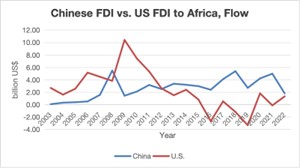
In this article, it will undertake a comprehensive examination of "patient capital" within the context of China's foreign direct investment (FDI) in Africa, introducing the concept and its distinctive characteristics. This analysis is framed against the backdrop of China's evolving economic and trade relationships with other nations. Firstly, it will provide a brief literature review outlining the essence of patient capital and its application in China's FDI strategies. Subsequently, this paper will delve into the historical trajectory of China's direct investment in Africa, examining shifts from state-owned enterprises (SOEs) to private enterprises and their subsequent impacts on African economies. This section underscores the emergence of long-term oriented "patient capital" approaches, challenging perceptions of China's investments as purely altruistic. Furthermore, it will analyze the structural composition of China's investments in Africa, emphasizing the strategic focus on long-term gains and relationship-building. This analysis sheds light on the transformational nature of China's engagement in Africa, fostering sustainable development and enhancing African countries' autonomous production capacities. To contextualize China's approach, this paper will compare it with that of the United States, exploring differences in investment strategies, motivations, and their respective outcomes on African nations. Utilizing case studies, it will assess the multi-faceted impacts of these investments on African economies and their contributions to China's domestic economic advancement. This comparative analysis underscores the practical significance of China-Africa cooperation, highlighting a historical opportunity for mutual benefit and win-win outcomes. By emphasizing sustainable development and capacity-building, China's FDI in Africa presents a compelling narrative of shared prosperity and growth.
Show more
Read Article PDF
Cite
Research Article Open Access
Examining Factors Contributing to the Entrenchment and Collapse of Authoritarianism Through the Lens of the Arab Spring
Article thumbnail
This paper hopes to examine the reasons contributing to the failure of the Arab Spring to culminate in a lasting change in political reform and democratisation. The article utilises frameworks by previous authors to explain the phenomenon of the short-lived democracies in the Middle East and North Africa (MENA) as well as provide additional insights of the author in obtaining a comprehensive understanding of the reason why autocratic states are so entrenched within MENA. At the end of this, the aim is to provide political substantiations regarding the failure of the Arab Spring, as opposed to the current focus surrounding violence and civil war as the driver to stunted democratic growth and autocratic resurgence. The article concludes that MENA countries are uniquely situated by their social, political and economic institutions and history that make democratic growth difficult unless as a means to achieve another priority, such as economic prosperity. This can be extrapolated towards analysing the behaviours of a variety of other states, democratic or autocratic, in their interactions with their population and foreign states.
Show more
Read Article PDF
Cite
Research Article Open Access
Study on the Criminal Regulation of Foreign Commercial Bribery by Chinese MNEs
In the process of global economic integration, Chinese multinational enterprises (MNEs) have continued to expand their overseas operations, becoming significant players on the international commercial stage. However, the acceleration of their internationalization process has been accompanied by escalating issues of foreign-related commercial bribery, which erodes MNEs' reputation and interests and poses challenges to China's international image. This paper commences by delving into the recent status of China's criminal legal framework regulating foreign-related commercial bribery committed by MNEs, highlighting specific provisions in the Criminal Law of China as well as other pertinent regulations. Subsequently, the paper proceeds to pinpoint the shortcomings and deficiencies within the existing legal regulatory system, notably including issues such as jurisdictional evasion and ambiguous definitions of specific concepts like the scope of bribe recipients. Drawing extensively from international legislative experiences, including the United States' Foreign Corrupt Practices Act, the UK's Bribery Act, and the United Nations Convention against Corruption, this paper finally distills successful practices and offers valuable recommendations for enhancing China's legal system. The proposed measures encompass clarifying the definition of bribery acts, refining the scope of bribe recipients, and enriching sentencing factors. Moreover, the paper highlights the necessity of motivating corporate compliance through legal means, thereby curbing bribery at its source. This study provides research support for refining China's anti-overseas bribery legal framework, which in turn can bolster the credibility of Chinese MNEs in the international market, foster the growth of China's transnational commerce, and elevate China's international competitiveness.
Show more
Read Article PDF
Cite
Research Article Open Access
The Belt and Road Initiative: Geopolitical Implications for South Asia
The Belt and Road Initiative (BRI) has been initiated in China in 2013 as a transformative global infrastructure and development endeavor involving more than 70 nations. Aside from its economic and financial implications, however, the BRI is often also perceived as China’s expansionist strategy in increasing soft power. With South Asia playing a pivotal role due to its strategic position and growing economic potential, this paper examines the geopolitical implications of the BRI and Chinese influence in the region. The study explores BRI projects with case studies, revealing how the initiative both offers prospects for economic growth and highlights challenges around sovereignty, debt dependency, and regional security, especially in a region marked by historical rivalries and political complexities. Particular attention is given to the effects of the BRI on the power balance between China, India, and other South Asian nations, as well as its broader impact on strategic partnerships and regional dynamics. Through an analysis of key BRI projects in South Asia and its implications, this paper assesses both the opportunities and challenges the initiative presents, offering insights into the enduring geopolitical consequences for the region.
Show more
Read Article PDF
Cite
Research Article Open Access
Analyze the Multidimensional Impact of the Russo-Ukrainian War on the United States and Future War Trends in Terms of Energy, Industry, and Societal Breakdowns
The Russo-Ukrainian war has had significant and multidimensional effects on the United States, influencing energy security, industrial operations, and societal stability. This paper explores the ongoing disruptions in the energy sector, highlighting the accelerated shift toward renewable resources. The paper further analyzes how the coming disruptions will impact future trends in warfare, especially global energy security and the way modern society is structured. It also addresses the industrial impact, including supply chain challenges and the surge in U.S. defense spending. Societal impacts are examined, focusing on increasing economic inequality and political polarization as a result of war-induced inflation. The paper concludes by analyzing how these dimensions affect future war trends, especially in terms of energy dependence, industrial resilience, and social fragmentation. The analysis provides a comprehensive understanding of how global conflicts reverberate across multiple sectors in the U.S. as well as an assessment of future trends and recommendations for government responses and transformational thinking.
Show more
Read Article PDF
Cite
Research Article Open Access
Economy, Geography and Insurgency: Understanding the External Factors Behind Boko Haram's Rise
Over the last decade, Boko Haram has been a major security threat to Nigeria. The terrorist organization has launched numerous attacks and kidnappings on both civilian and military targets. Despite ongoing efforts by the Nigerian government and its military forces, the insurgency remains active, and ultimate victory over the group has yet to be achieved. Many scholars attribute Boko Haram’s emergence and continued existence to a combination of extreme religious ideologies and the government's failure to develop an effective counter-insurgency strategy. However, these factors alone do not fully explain the group's success. Throughout its development, external factors such as the economy and geography provide significant advantages to Boko Haram, ranging from recruitment to supply and concealment. This paper examines the economic, educational, geographical, and regional context of the Boko Haram insurgency to demonstrate how social and natural conditions can promote insurgency and offer new insights into the ongoing global anti-terrorist campaign.
Show more
Read Article PDF
Cite
Research Article Open Access
A Balanced Application of Anti-discrimination Law in the Games Industry
This paper explores the successes and failures of "Black Myth: Sun Wukong" and "Concord," two games that highlight the complex implications of enforcing anti-discrimination laws within the gaming industry. It assesses how the drive for diversity and inclusivity, when combined with an overemphasis on political correctness, can gradually estrange users and detract from the overall gaming experience. Furthermore, the paper challenges the potential adverse consequences of anti-discrimination laws on attaining equality, arguing that legal enforcement should strike a balance between creative freedom and social justice to avoid imposing undue restrictions on the industry. Ultimately, the study concludes that, as a prominent medium of cultural expression, the creative space for games must be appropriately protected. Simultaneously, society and the law should strive for more nuanced and balanced approaches to promote the healthy development of the gaming industry and ensure its harmonious integration with societal progress.
Show more
Read Article PDF
Cite
Research Article Open Access
Navigating the Impact of Multinational Enterprises on Labor Rights: Barriers to Justice in Developing Countries
The rise of multinational enterprises (MNEs) presents both economic opportunities and significant challenges, particularly in developing countries. This essay examines the adverse effects of MNEs on labor markets in these regions, focusing on redressing corporate rights violations and the barriers to justice for affected workers. The legal frameworks in both host and home countries often fail to hold MNEs accountable due to weak regulatory mechanisms and the corporate veil doctrine. International regulations, such as the UN Guiding Principles on Business and Human Rights, provide some guidance but lack enforceability. Recent due diligence laws in Europe offer promising steps toward corporate accountability, yet they fall short by excluding meaningful participation from stakeholders in the Global South, whose socio-economic realities are crucial to addressing MNE-related issues. The essay advocates an integrated approach that involves Global South governments, civil society, and local communities in decision-making, risk assessments, and enforcement processes to ensure justice and equitable protection for affected workers.
Show more
Read Article PDF
Cite
Research Article Open Access
China's High Rate of Underage Students’ Depression and Related Laws on the Protection of Teenagers
In China, the depression rate among underage students has shown an upward trend in recent years and underage students have gradually become the largest group affected by depression in the country. Depression among underage students can lead to many serious consequences, such as a lack of interest in school and even suicide. Some provisions in China's Minor Protection Law can play a role in protecting minors suffering from depression. In response, the Chinese government also has introduced several measures, such as the "Double Reduction" policy, to improve the situation, but with limited success. This article describes the current state of the Minor Protection Law regarding student depression and analyzes the existing protection laws and related measures to identify the reasons behind the rising depression rates among underage students and the ineffectiveness of new policies. At the same time, revisions to the relevant protection laws and suggested measures are proposed from four perspectives: underage students, schools, families, and society. These recommendations can first help relevant authorities improve the protection laws, and researchers can use these suggestions to propose further revisions.
Show more
Read Article PDF
Cite