Articles in this Volume

Research Article Open Access
The Influence of Cultural Background on Employment Behavior
Cultural background plays an important role in the organizational environment and has a wide and profound impact on employee behavior. Based on the cultural dimension theory proposed by Hofstede, this article attempts to explain more clearly from a theoretical perspective the predictable effects that different cultural backgrounds may have on cooperation in cross-cultural teams. This article also refers to a research report that investigated the cross-cultural after-sales team of "DM Company". It attempts to use this study as an example to explore the impact of different cultural backgrounds on sales work in cross-cultural teams, and to explore the impact of other cultural backgrounds on work. This paper aims to explore the impact of cultural background on employee behavior, including communication style, decision-making style, work attitude and so on. By analyzing how different cultural backgrounds shape employee behavior, it can help organizations better manage diverse employee groups and improve work efficiency and employee satisfaction.
Show more
Read Article PDF
Cite
Research Article Open Access
Differences in BBC and CCTV Coverage: An Applied Validation of Cultivation Theory
Every country in the world has its own media organization, so why is there a difference in perspective and content between media organizations around the world? This paper will use the BBC and CCTV as examples to try to explain the reasons for the differences between the different media and further explain the underlying principles behind the variation in media coverage in the context of cultivation theory. People can see that the factors contributing to this difference are complex and may include the nature of the media itself, the collective interests it represents, and the significance of the events it covers for the media.At the same time, the laws of media operation also play an important role behind the scenes, leading to all these differences, and the different reports may also be due to the application of different media theories. This paper will elaborate on the above factors.
Show more
Read Article PDF
Cite
Research Article Open Access
Rwanda-Conflict, Violence, and Reconstruction
When it comes to Rwanda, most people first think of the tragic movie — The Rwanda Hotel. That film recreates the bloody 1994 massacre in Rwanda, causing irreparable harm to every Rwandan people. Rwanda's history is indeed full of hatred and misery. After the massacre, the Rwandan government led the people to take national reconstruction measures for the country and achieved the desired results. Based on adjusting their own culture, the Rwandans also explored a development path that suits their national conditions and has African characteristics. After the completion of the reconstruction, Rwanda largely resumed its economic development and made all-around progress, even known as the “Singapore of Africa.” Rwanda's reconstruction policy is generally improving, but there are still some shortcomings that need to be adjusted and improved. Driven by those reconstruction measures, Rwanda has achieved remarkable results and is worth learning from other countries.
Show more
Read Article PDF
Cite
Research Article Open Access
Sophisticated News Outlets: Comparing The New York Times and Global Daily on the Framing and Diffusion of Attitude
Today, news media have become essential to everyday life, offering the public more information on political events. However, people who read different media outlets often hold different opinions on the same event. It is intriguing to think about how people are affected to hold the attitudes intentially directed by the news outlets and to figure out some specific reasons behind. There are lots of communication techniques used by the news outlets in journalism in order to shape their readers’ ideas, and framing is one of the common methods. Framing refers to the ways in which how an issue is characterized in news can influence how the audience understand it. This paper argues that news outlets strategically use framing to shape the orientations and opinions of their readers, by comparing the coverage of the Wagner Mutiny by two news agencies, Global Daily and The New York Times. This paper proceeds with, first, a summary of how the two news outlets reported the Wagner Mutiny, focusing on their different attitudes. Second, the paper provides a potential explanation of these differences by identifying the framing mechanisms that induces the readers’ thoughts in each news outlet.
Show more
Read Article PDF
Cite
Research Article Open Access
Analysis of Nonlinear Narrative via the Lens of the Coherence Theory of Language
The objective of this study is to examine the utilization of nonlinear narrative approaches in literature and investigate the potential optimization of comprehension of intricate plots through the application of linguistics-related knowledge. This study has determined, based on an examination of pertinent literature, that the use of non-linear narrative techniques can augment the appeal and intricacy of a literary piece, while also intensifying the level of reading challenge for its audience. This research use qualitative research methodologies to examine the utilization of non-linear narrative approaches, with a focus on comprehending these strategies through the analysis of textual data. The findings indicate that the principles of linguistic theory can be effectively employed in the analysis of literary texts as well as in the interpretation of films and television productions. This discovery has the potential to enhance the applicability of linguistics, thereby bridging a portion of the existing disparity between linguistic theory and real-world applications.
Show more
Read Article PDF
Cite
Research Article Open Access
Integrating Models in Education: Evaluating Strategies and Enhancing Student Learning Through Advanced Analytical Methods
Article thumbnail
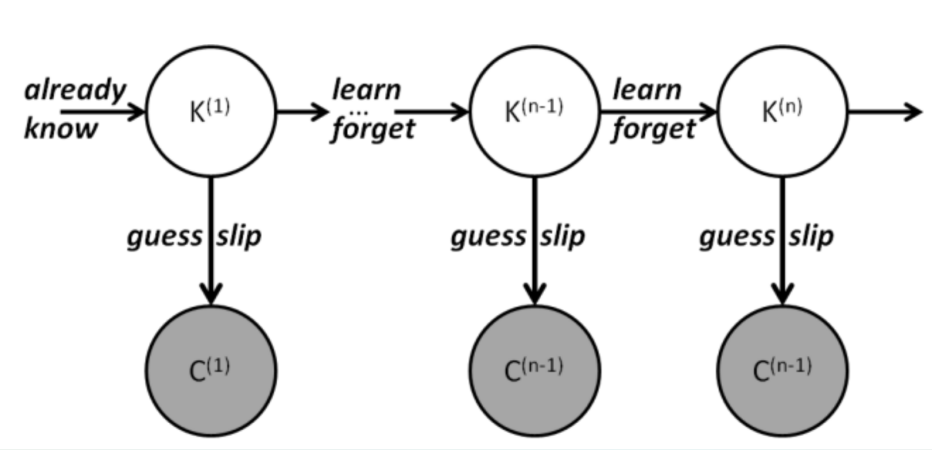
This paper undertakes an in-depth examination of contemporary educational models, focusing on their impact on student learning and teaching strategies. It contrasts static models like the Item Response Theory (IRT) with dynamic models, notably Knowledge Tracing (KT) and its extensions such as the Knowledge Tracing Model (KTM) with a "Tutor Intervention" element. These dynamic models, particularly the dynamic Bayesian network (DBN) structure of KT, provide a detailed perspective on student learning, accommodating temporal skill variations and diverse educational interventions. The study further explores learning decomposition, revealing its effectiveness in evaluating various reading practices and their influence on reading fluency, underscoring the need for personalized educational approaches. Additionally, the paper discusses the Bayesian Evaluation and Assessment framework within Intelligent Tutoring Systems (ITS), offering a holistic view of both the immediate and long-term effects of tutoring. Key insights are presented on the efficacy of different educational models in reading education, advocating for diversified reading practices and personalized learning strategies. The paper also identifies limitations in current models, such as high standard errors in learning decomposition and weak fits in models like LR-DBN, and proposes future research directions, including automated analysis and a hybrid approach combining human expertise with computational analysis. This approach aims to enhance educational data mining and inform effective educational strategies and outcomes.
Show more
Read Article PDF
Cite
Research Article Open Access
Netflix Evolution and Strategy for Future Development
Since Netflix's founding in 1997, Netflix has transformed from an online DVD rental service into a massive streaming media company. Its 44.21% share of the US streaming market by 2023 shows how flexible and well-liked it is in the cutthroat world of streaming media. Amazon Prime Video, Hulu, Disney+, HBO Max, and other streaming services are competitors for Netflix, which has had inconsistent financial performance in 2023. Its strategy is centered on investing in high-value projects, creating content with both local and global appeal, and expanding globally. Netflix prioritizes original content, technological innovation, and international expansion as part of its subscription-based business model. In the cutthroat streaming market, Netflix faces off against established behemoths and upstarts and oblique rivals like social media sites. Though obstacles like financial management, content saturation, and strategic transparency still exist, its strategic concentration on unique material and international expansion seems appropriate. Future success is advised by prioritizing user experience, investing in technology, diversifying revenue streams, increasing the diversity of material, and being transparent about audience data.
Show more
Read Article PDF
Cite
Research Article Open Access
Electoral Democracy: The Manifestation of Collective Will and Deliberation
This article examines the conditions under which elections can genuinely express the 'will of the people.' It argues that the establishment of a shared community and the engagement in genuine deliberation are fundamental to achieving this. Drawing on the philosophical concept of 'general will' as presented by Jean-Jacques Rousseau, the article posits that a democratic society must first and foremost establish an effective social contract. This contract serves as a crucial mediator between conflicting individual desires, fostering harmony and collective wills. Furthermore, the article also notes that the establishment of a social contract is not a one-time event but rather, an ongoing process. It emphasizes the need for this contract to be consistently renewed and reevaluated through thoughtful deliberations. The article analyzes various election processes, highlighting the failures and successes of different countries. It underscores how different approaches to elections can either facilitate or hinder the formation of a representative general will. It finally concludes that elections, when conducted under the proper conditions of deliberation and a constantly evolving social contract, can indeed serve as authentic expressions of the will of the people.
Show more
Read Article PDF
Cite
Research Article Open Access
Role of Language in Emotions and Bias: A Cognitive Linguistic Perspective of Affective Political Media in the US
In today’s digital era, where emotions are central to journalism and information disseminates rapidly, the role of language in transmitting emotions, stereotypes, and biases has become a subject of debate and study. The use of language in news media can be argued, as it may prioritize sensationalism over accuracy to tap into people’s feelings under new business models and the attention economy. While journalism ethics aim to minimize bias, journalism consistently incorporates emotions to captivate the audience and create an “experience of involvement”. This is significant because language, consumed from diverse media news channels, is integral to cognition. Research in cognitive linguistics demonstrates that human beings view the world in metaphoric terms, and language defines and constrains communication, thinking, and sense-making. This article explores linguistic mechanisms such as metaphors of “flood” and “aliens”, agenda setting, selectivity, framing, and expectancy bias, through which emotions, perspectives, and affectivity are sustained and propagated in political news reporting. It considers the impact of stereotypes and biases, particularly in the media portrayal of undocumented immigrants and different framings in the description of the War in Gaza. The article highlights that language is seldom neutral and is intertwined with motives, emphasizing the importance of understanding the persuasive power of words. In conclusion, this paper reveals the role of language in shaping perceptions of message receivers and contributes to enhancing linguistic justice, informing more ethical approaches to journalism and media production. It emphasizes the need for an editorially conscious and intelligent use of language to create engaging, empathetic content.
Show more
Read Article PDF
Cite
Research Article Open Access
Better Ways to Protect Indigenous Knowledge and Cultures Through Intellectual Property
Indigenous knowledge can be understood as a network of knowledge, beliefs and traditions that can be preserved and have some commercial value over time. Along with the increasing visibility of indigenous cultures in the global marketplace, there are also significant challenges. These challenges are often related to the physical destruction and utilization of indigenous lands and knowledge. The historical context and uniqueness of indigenous cultures suggest that they require greater attention and special protection under the law. From the current provisions and judgments, some individual authors have been compensated while the rights of the broader indigenous community have not been adequately protected. From an international perspective, the focus of the work of international organizations has expanded to include indigenous peoples' land claims and cultural rights. In addition to various international organizations and related instruments, a number of countries and regions are working to protect the intellectual property rights of indigenous cultures. Australia is a country that is typically faced with the protection of indigenous intellectual property. For Australia, the effective protection of indigenous knowledge remains an issue that needs to be addressed and managed through the legal realm. The positioning of indigenous knowledge in the law is complex and incomplete. Australia has played an important role at the international level, but the actual response within Australia to the international level has been minimal. Australia should therefore recognize and respond to these developments in legislation as soon as possible.
Show more
Read Article PDF
Cite