Articles in this Volume

Research Article Open Access
Empowering High-Quality Development of the Cultural and Tourism Industry Through Traditional Cultural Elements: Pathways Exploration—A Case Study of Guangxi
This study selects Guangxi as a case and, from the perspective of "experiential value generation," constructs a four-dimensional analytical model encompassing "in-depth excavation of cultural resources—transformation and generation of experiential products—effective linkage with target audiences—robust support of the industrial ecology." It comprehensively sorts out the intrinsic mechanisms and realization pathways through which traditional culture empowers the cultural and tourism industry. Within this framework, four specific implementation directions are covered: first, activating cultural materials guided by immersive experiences; second, restructuring product features centered on everyday experiences; third, innovating promotion models targeting young audiences; and fourth, optimizing the service system based on industrial linkage, aiming to provide ideas for the integration process of the cultural and tourism industry in the land of Guangxi.
Show more
Read Article PDF
Cite
Research Article Open Access
Challenges and Solutions in Integrating AI for Personalized Learning in Early Childhood Education
This study examines how artificial intelligence is used in early childhood education through interviews with four teachers in China and the United States. It highlights five issues: limited teacher training, structural constraints, uneven use of personalized learning, developmental mismatch, and mixed teacher attitudes. These issues are shaped by both classroom practice and institutional context. Teachers play a key role in how these tools are used. In practice, they are more effective when they support teacher judgment and fit the interactive and experience-based nature of early learning.
Show more
Read Article PDF
Cite
Research Article Open Access
A Conceptual Framework for Understanding the Impact of Learning Management Systems on Teaching Quality and School Management: A China–US Comparison
Article thumbnail
The rapid expansion of digital learning management systems (LMS) has shaped teaching, learning, and school management worldwide, yet their adoption and impact vary across countries. This study develops a conceptual framework to understand how LMS affect teaching quality and school management in different national contexts, using China and the United States as comparative cases. Drawing on socio-technical systems theory and comparative institutional analysis, LMS are conceptualized as educational infrastructures shaped by the interaction of technology, governance, and teacher practice. Rather than testing causal relationships, this study presents a set of theoretically based propositions to explain cross-national differences in LMS adoption patterns, teaching impacts, and management outcomes. It proposes that LMS effectiveness depends on national policy environments, governance models, and teacher professionalism. Centralized education systems tend to emphasize the standardization and governance functions of LMS, while decentralized systems are more likely to leverage LMS to improve administrative efficiency and coordination. By shifting focus to institutional embeddedness, this study contributes to research in comparative education and educational technology and provides theoretical guidance for future empirical studies on digital learning systems.
Show more
Read Article PDF
Cite
Research Article Open Access
An Analysis of Factors Influencing AI Adoption among Higher Education Students
As the digital transformation of global higher education deepens, the widespread adoption of artificial intelligence (AI)-assisted tools is profoundly reshaping educational paradigms and academic collaboration models. However, most current research focuses solely on single technical attributes such as accuracy or processing speed, with a significant lack of exploration into the interplay between institutional policies, cultural orientations, and individual socioeconomic status. This study employs the Technology Acceptance Model (TAM) as its core analytical framework—effectively explaining individual adoption—to investigate the combined effects of technological attributes, institutional environments, and individual differences on university students' willingness and depth of AI tool adoption. It examines three primary cases: the campus proliferation of Grammarly, the Russell Group's ethical policy formation process, and ChatGPT's progressive payment model. Findings reveal that perceived value is a necessary condition for technology adoption, while meso-level institutional orientations and normative ethical reasoning serve as key variables moderating students' technological readiness and reducing adoption anxiety. Notably, income disparities are emerging as an invisible technological barrier.
Show more
Read Article PDF
Cite
Research Article Open Access
Research on the Integration of the Zone of Proximal Development Theory and English Teaching from the Perspective of Technology Empowerment (2015-2025)
Article thumbnail
In the context of digital transformation, technology has infused new vitality into Vygotsky's Zone of Proximal Development (ZPD) theory in English teaching. By examining key Chinese literature from 2015 to 2025, this article follows how ZPD and English instruction are integrated within technology-aided setups. The results indicate a ten-year shift from using single tools to having anintegrated, multi-technology ecosystem. This transformation, which is centered on personalized paths, immersive scenarios, and collaborative learning, boosts the efficiency as well as the students' capabilities.However, there are still quite a number of severe challenges existing, such as the unbalance between tool rationality and value rationality, the conflict between personalization and impartiality, and the gap between data and theory.This paper puts forward that future advancement ought to go beyond simply making use of technology. It endeavors to create a human - oriented, adaptable and equitable intelligent learning ecosystem, and also puts forward practical approaches and policy recommendations to guide the high - quality development of this domain.
Show more
Read Article PDF
Cite
Research Article Open Access
A Study on the Impact of AI-Enabled Multimodal Teaching Methods on Oral English Expression of Junior High School Students
In the context of globalization, oral English proficiency has become increasingly important, and the junior high school stage is a crucial period for cultivating students' oral English skills. However, traditional English oral teaching lacks real-life contexts, monotonous teaching methods, and insufficient personalized guidance. Artificial intelligence has injected new vitality into multimodal teaching and provided new solutions to these problems. This study adopts a literature review method, systematically retrieved mainstream databases such as CNKI, Science Citation Index, and Google Scholar, and reviewed relevant literature on artificial intelligence, multimodal teaching, English oral teaching, and junior high school English published in the past decade. It analyzed the theoretical basis, the current status of application, the impact on students' oral English, and the existing challenges. This study shows that multimodal teaching based on artificial intelligence is based on constructivism, situated cognition, and input-output hypotheses. It creates a virtual, immersive environment and provides personalized support and intelligent feedback, thereby effectively improving students' oral skills and their willingness to communicate. However, there are still challenges, such as technological dependence, the digital divide, changes in teacher roles, and ethical issues. Future research should optimize human-machine collaboration, track long-term effects, and improve the assessment system.
Show more
Read Article PDF
Cite
Research Article Open Access
Stuck in the County - Household Registration System, Moral Geography, and Spatial Production of Migrant Children
With the advancement of urbanization in China, a large number of rural residents have migrated to cities for work, resulting in a sizable group of migrant children who accompany their parents. However, these children often struggle to genuinely integrate into urban life and continue their education. This study adopts a qualitative research approach and, through an analysis of relevant policies and existing literature, seeks to understand how institutions and social norms jointly shape the educational spaces of migrant children. It can be concluded that such barriers arise not only from the household registration system but also from societal moral judgments regarding "who should live where," ultimately shaping a distinctive spatial configuration. The interplay of institutional frameworks and social perceptions has gradually positioned counties as the spatial locus for accommodating the educational needs of migrant children.
Show more
Read Article PDF
Cite
Research Article Open Access
An Experimental Study on the Impact of Project-Based Learning on Primary School Pupils' Problem-Solving Abilities
Article thumbnail
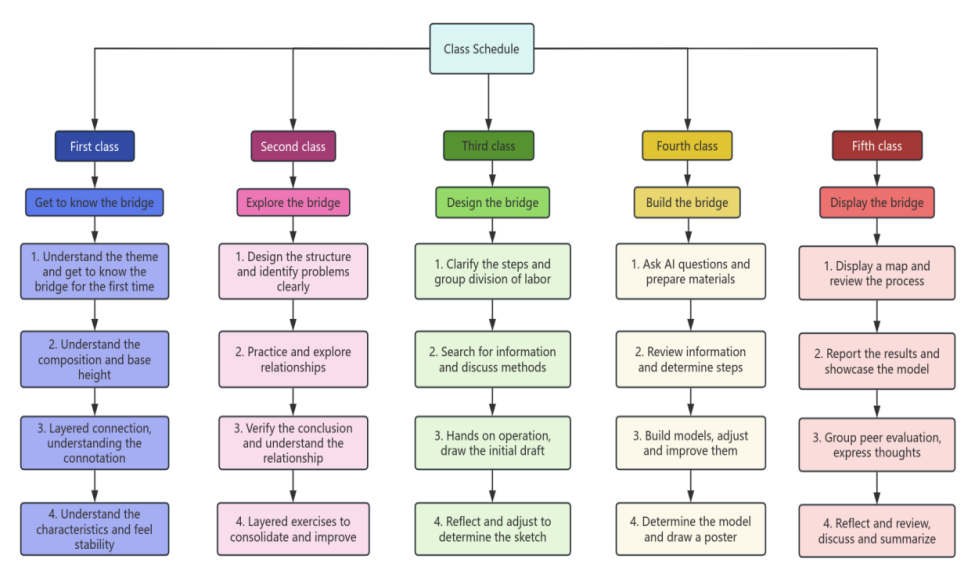
Against the backdrop of cultivating core competencies, problem-solving ability has become an indispensable quality for the well-rounded development of primary school pupils. However, traditional teaching models exhibit limitations in favoring theory over practice, rendering them inadequate for nurturing this competency. Consequently, this study employed an adopted experimental design involving 60 Year 4 pupils to investigate the impact of project-based learning on primary pupils' problem-solving abilities. Thirty pupils formed the experimental group, undertaking an interdisciplinary project-based learning activity themed around "Designing the Shiziyang Bridge." The remaining thirty pupils constituted the control group, engaging in traditional lecture-based instruction. Both groups received identical teaching content and lesson hours. Data for effectiveness evaluation were collected through scale assessments, observation, and semi-structured interviews. Results showed no significant differences between groups in pre-experiment total problem-solving scores or sub-dimensions (P>0.05). Post-experiment, the experimental group demonstrated significantly higher scores than the control group in problem-solving quality (13.37 ± 1.829 > 11.23 ± 1.794) and significantly outperformed the control group (P < 0.001). This study demonstrates that project-based learning effectively improves primary pupils' problem-solving abilities, offering practical guidance for cultivating core competencies and innovating teaching methods.
Show more
Read Article PDF
Cite
Research Article Open Access
The Cross-Linguistic Transfer of Chinese Phonological Awareness to English Phonological Learning Among Fifth-Grade Primary School Students
Language awareness constitutes the core cognitive basis for students' bilingual comprehensive and the progression of their reading and writing proficiency, and is of vital importance to primary school students' English learning. Primary school is a critical stage when students' English learning habits gradually take shape and stabilize. It is also the period when the transfer of Chinese is most concentrated and obvious; if not corrected in a timely manner, it will exert a profound and lasting impact on their future English learning. Previous relevant studies have mostly focused on students in junior high school and high school, with rare investigations into the cross-language transfer of Chinese language awareness among primary school students, as well as the correlation between Chinese pinyin proficiency and such cross-language transfer. Therefore, this study is of significant research value. With 112 fifth-grade students as research subjects, this study adopted standardized phonetic tests and pronunciation assessment instruments to explore the positive transfer and negative transfer of Chinese language awareness in English phonetic learning, and the correlation between Chinese pinyin proficiency and cross-language transfer. It aims to provide theoretical and practical references for English phonetic teaching in primary schools.
Show more
Read Article PDF
Cite
Research Article Open Access
Empowerment and Guidance: Educational Implications and Implementation Paths of Students' Leisure Time in the Intelligent Era
Article thumbnail
This study is based on the "leisure", an undeniable educational field at present. It reinterprets students' time allocation against the background of greatly improved knowledge transmission efficiency, reveals its potential risks, and differentiates the essential differences between "leisure time" and "free time" as well as the connotation of leisure education. Furthermore, combined with the "time paradox" caused by intelligent technology, it explains the value of leisure from two dimensions: the perfection of individual mind and the construction of group "resonance circle". Taking this as an opportunity, it puts forward the new identities of teachers for the intelligent era, namely "designer of leisure time and space", "guide of meaning negotiation" and "empowerer of community", and constructs a specific action framework to provide a possible path for teachers to meet the challenges of the times. The value lies in clarifying the time dimension of educational reform in the intelligent era, providing a basis and path for the implementation of policies such as "five-in-one education", and playing a positive guiding role in promoting the all-round development of students' personality.
Show more
Read Article PDF
Cite