Articles in this Volume

Research Article Open Access
Beyond Conditionality: China's New Path in Foreign Aid and Sovereign Lending
Western-dominated development lending, led by the IMF and Paris Club, has long relied on rigid policy conditionality and structural adjustment packages that frequently deepen inequality in low-income recipient states. Since 2017, commentators and Western politicians have popularized the so-called "Chinese debt trap" narrative, claiming China deliberately saddles poorer nations with unsustainable liabilities to seize strategic infrastructure amid repayment defaults. Focusing on the most widely cited case—the Hambantota Port in Sri Lanka—this study dismantles such one-sided claims through primary project timelines and sovereign debt data. Evidence from this paper demonstrates the port initiative originated from Sri Lanka's domestic infrastructure demands rather than Chinese coercion; loan pricing remained competitive against global commercial financing at the time, and the 99-year port lease constituted a stand-alone commercial transaction to ease the nation's liquidity squeeze, not a debt-for-asset seizure. Overall, this paper argues that China's non-conditional bilateral lending represents an alternative development finance model distinct from Western orthodox approaches, while oversimplified debt-trap rhetoric conceals the complex structural drivers of developing nations' external debt pressures.
Show more
Read Article PDF
Cite
Research Article Open Access
Digital Governance Models in Greater China: A Comparative Analysis of Public Service Delivery in Mainland China, Hong Kong, and Macao
Article thumbnail
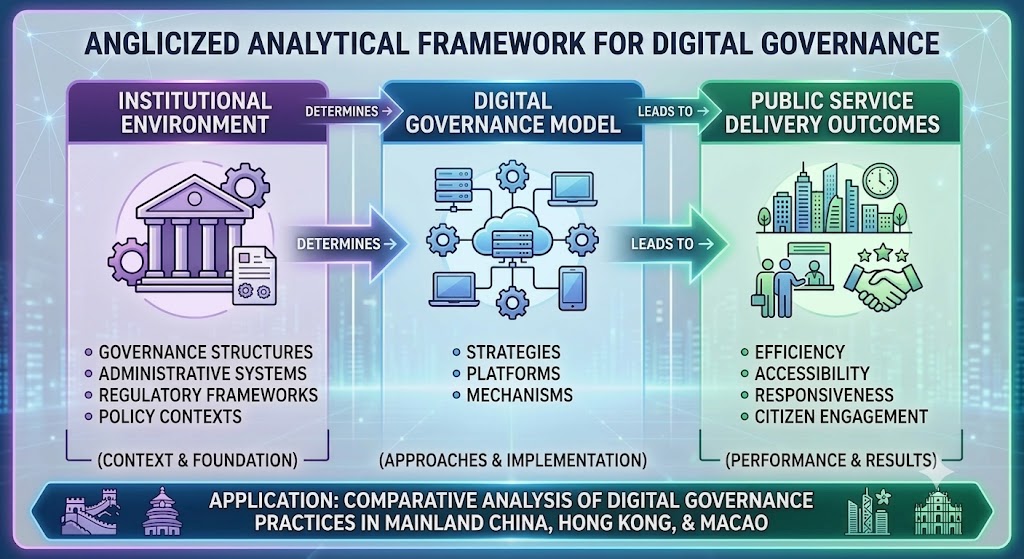
Digital transformation has become a key driver of public sector innovation, encouraging governments to redesign public service delivery through digital governance. Although Mainland China, Hong Kong, and Macao share cultural and historical connections, their distinct institutional contexts and administrative arrangements have resulted in different digital governance models. This study compares digital governance practices across the three regions to examine how institutional conditions influence governance approaches and public service delivery outcomes. A qualitative comparative case study approach is adopted, drawing on policy document analysis and secondary literature to examine governance frameworks, service delivery mechanisms, and citizen-oriented initiatives. The findings reveal that each region demonstrates different strengths in administrative efficiency, digital accessibility, service responsiveness, and citizen engagement, reflecting the influence of institutional arrangements and policy priorities. By identifying both similarities and differences among the three regions, this study contributes to a deeper understanding of digital governance development in Greater China and provides practical implications for policymakers seeking to enhance public service delivery and promote cross-regional policy learning.
Show more
Read Article PDF
Cite