Articles in this Volume

Research Article Open Access
From Code to Nature: Algorithmic Simulations Shaping Generative Art
Article thumbnail
With the integration of technology and art, algorithmic simulation has become a core driving force in generative art, blurring the boundaries between code, nature, and artistic creation. This work aims to explore how three key algorithmic techniques--fractals, particle systems, and cellular automata--simulate natural phenomena and shape generative art, while establishing evaluation criteria for such simulations: morphological fidelity, dynamic fidelity, situated coupling, and affective remainder. Through analyzing typical works by artists such as Ryoji Ikeda, Hamid Naderi Yeganeh, Refik Anadol, and John Gerrard, the study finds that these algorithmic strategies effectively capture the structural logic and dynamic characteristics of nature, generating artworks with emergent complexity. However, digital simulations inevitably lack some sensory qualities of nature, and their ethical and ecological implications depend on situated coupling with real-world contexts and data. This work enriches the theoretical framework for evaluating generative art, highlights the unique value of algorithmic simulation in revealing natural order, and provides insights into how art can inspire ecological awareness in the digital age, bridging the gap between human, technology, and nature.
Show more
Read Article PDF
Cite
Research Article Open Access
The Influencing Factors of Crime Control and Their Practical Implications
In recent years, policymakers have placed crime control at the centre stage, and urban violence has become concentrated at the micro-location. Each of these approaches, whether policing, sentencing, or community-based strategies, has been shown to have some effectiveness, but in isolation. Existing research lacks an overview of how these approaches interact with one another to produce what could be classified as sustainable crime reduction. This article will demonstrate the complementarity of each of the four selected policing, intervention, and punishment solutions by drawing on recent findings in hotspot policing, problem-oriented policing (POP), sentencing and rehabilitation models, and community violence intervention (CVI). The analysis finds that hot-spot policing reduces immediate risk, POP approaches the harmful impact of structural problem drivers, CVI strengthens informal social controls, and incentive-based sentencing reduces recidivism when deployed to align with threshold effects. The findings show that crime control is most effective when place-based enforcement is paired with relational and rehabilitative strategies. Whole-systems analyses (WSA) applied to cities that have abandoned unsustainable paradigms in favour of sustainable ones open an exploration of features and priority settings for real-life implementations of city-level Violence Intervention and Safety Platform (VISP) models that combine hot spots, POP, and risk-need-responsivity principles, together with sentence-tiering incentives and evaluation indicators for CVI programs. According to the study, an integrated, evidence-based model that balances enforcement and prevention demonstrates how coordinated strategies can lead to more equitable and durable public-safety outcomes.
Show more
Read Article PDF
Cite
Research Article Open Access
Legal Regulation of AI-Generated Video Behaviors
While AI-generated video technology provides convenience to the public, it may also be used by malicious individuals to cause varying degrees of social harm, making legal regulation necessary. This paper first focuses on introducing several common current AI-generated video technologies and their principles. Subsequently, it elaborates on the potential harms of AI-generated videos from four dimensions: personal rights and interests, fraud risks, political chaos, and social stability. Finally, it explores the legal regulation paths for AI-generated video technology from three perspectives—regulatory legislation, regulatory measures, and the responsibilities of various subjects—to prevent the abuse of AI-generated video technology.
Show more
Read Article PDF
Cite
Research Article Open Access
The Idealized Self-representation on Social Media and Social Comparison Anxiety —Based on the Analysis of Social Comparison Theory and Self-discrepancy Theory
Social media has become ubiquitous in modern society. It enables people to share pictures, videos and stories, while also allowing them to peek into other people’s lives. However, users typically only showcase their best, most beautiful and most successful moments. Because of this, what people see online are only a small and polished part of reality. At the same time, people spend a lot of time scrolling through others’ posts, comparing themselves with others. This can lead to negative feelings. Psychologists explain this using two main theories. The first is Festinger’s Social Comparison Theory, which posits that people evaluate their own worth by comparing themselves to others, especially when they do not have an objective standard. The second is Higgins’s Self-Discrepancy Theory, which suggests that people compare themselves with their ideal self, and when the gap is too wide they feel anxious or unhappy. Both theories help explain why social media can create psychological pressure and negative feelings. Research shows that heavy use of social media is linked with body dissatisfaction, stress, and even depression. Understanding these psychological mechanisms is important because it can help researchers and educators better address the mental health risks confronting young people in the digital age.
Show more
Read Article PDF
Cite
Research Article Open Access
The Great Role of Geological Storage-Based Carbon Capture and Storage in Mining Site Regeneration
Article thumbnail
To promote the application of carbon sequestration technology in mine reclamation and to fill the research gap regarding the long-term development direction of carbon sequestration areas, this study focuses on the feasibility of the coordinated development of underground and the surface systems in mining areas. By systematically analyzing historical restoration pathways of mining areas and current mainstream mine renovation paradigms, three critical bottlenecks are identified: uncertainties related to geological safety, inadequate governance structures, and the need to enhance social acceptance. Subsequently, the research focuses on examining two major case studies: the park renovation initiative in Germany’s Ruhr region and the conflict scenarios at Chile’s Chuquicamata Mine. This paper proposes a multi-dimensional promotion framework, covering technical standards, economic incentives, legal and regulatory mechanisms, as well as social governance strategies. Finally, from the perspective of long-term development, a comprehensive evaluation index system will be established for the future positioning of mining areas.
Show more
Read Article PDF
Cite
Research Article Open Access
Analysis of Key Factors of Energy Consumption in University Teaching Buildings
In response to the goals of improving energy efficiency and achieving dual carbon, this study focuses on high-energy-consuming university teaching buildings, aiming to identify the key factors affecting their energy consumption and to provide a reference for related energy conservation work. The study selected four building cases with the same basic parameters and set up the control and experimental groups using the control variable method. The effects of geographical location, building type, and enclosure structure were discussed, respectively. The annual energy consumption was simulated and analyzed by professional software. The results show that the three factors have a significant impact on the energy consumption of the teaching building, and the role of the envelope is the most prominent, followed by the geographical location, which has a relatively small impact on the building type; At the same time, heating and refrigeration related energy consumption accounts for the highest proportion of the total energy consumption, which is the core link of energy consumption regulation by various factors. This study clarifies the roles of various factors in the energy consumption of teaching buildings, provides clear guidance for targeted implementation of energy-saving measures in the design, transformation, and operational management of university teaching buildings, and helps reduce energy consumption in these buildings.
Show more
Read Article PDF
Cite
Research Article Open Access
Analysis of Factors Affecting Energy Consumption in Student Dormitories
Article thumbnail
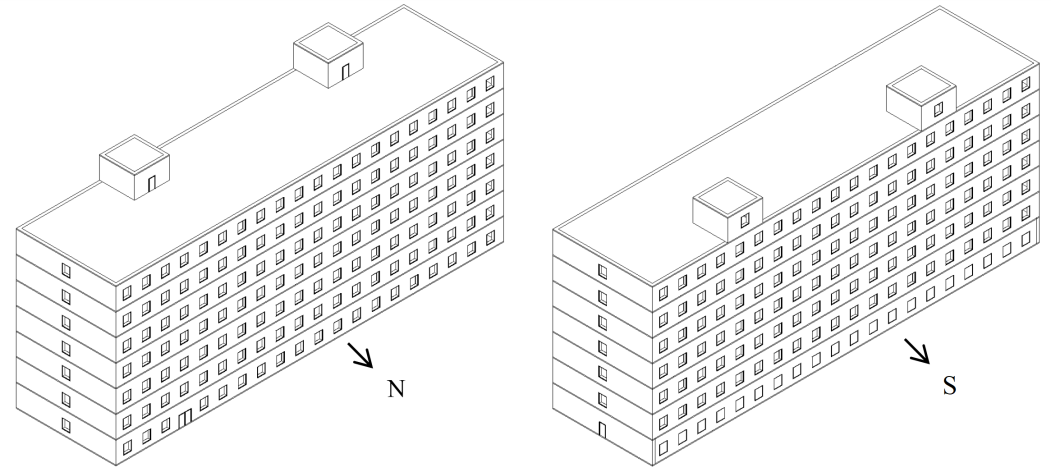
Against the backdrop of accelerated construction and green development concepts in university campuses, energy analysis of campus buildings can effectively provide a reference for improving the problem of excessive energy consumption, promoting the green and low-carbon transformation of campuses, and facilitating green and low-carbon development. Therefore, multi-dimensional research on building energy consumption is of great significance. This paper takes the student dormitory buildings of a certain university in Nanchang as a case study, using Revit software for simplified digital modeling and annual building energy simulation analysis. For dormitory buildings, the paper analyzes the effects of different factors on energy consumption from multiple dimensions, including building orientation, geographical location, and internal components, and proposes relevant reasons. The results show that different factors have significant differences in their impact on dormitory energy consumption. Rotating the building orientation 90 degrees clockwise increases cooling energy consumption by over 38%, and the best energy consumption performance observed when the wall thickness is 300mm. Furthermore, the total energy consumption and heating/cooling demand structures differ significantly among Nanchang, Beijing, and Hainan due to climatic differences. The research findings provide ideas and methodologies for university building design and contribute to China's "dual-carbon" goals.
Show more
Read Article PDF
Cite
Research Article Open Access
The Legal Standards for Determining the Illegality of Bundling Practices in Open Source and the Improvement of Related Systems
Open source has rapidly developed as a model of technological innovation in recent years. Driven by technological advances, the open source market has expanded rapidly; however, its characteristics have also given rise to potential monopolistic risks. Tying, one of the most common monopolistic practices in open source, poses challenges in assessing its legality and lacks a unified standard for evaluation. Therefore, it is necessary to analyze this issue by integrating traditional legal frameworks with the unique features of open source: on one hand, applying conventional consumer demand principles to determine whether tied products are independent and whether the tying is compulsory; on the other hand, considering the positive effects of open source, such as promoting innovation and providing free features, along with the implications of tying behavior. By addressing these two dimensions, this study aims to clarify the standards for assessing the legality of tying in open source contexts and to enhance the regulatory framework governing such behaviors.
Show more
Read Article PDF
Cite
Research Article Open Access
The Social Effects of the Employment and Support Allowance in the UK: A Welfare Scarcity Perspective
The Employment and Support Allowance (ESA) offers a critical lens for examining how contemporary welfare reforms shape disability inclusion in the United Kingdom. Emerging within a broader shift toward austerity and behavioural conditionality, ESA has undergone continuous policy adjustments, yet these reforms have not altered its foundational logic. Although the UK government has signalled further adjustments to disability assessments, such developments have not improved claimants’ circumstances; instead, they have intensified the regulatory pressures embedded within welfare administration, contributing to a cumulative pattern of disadvantage. This paper investigates how ESA, through its core eligibility mechanism, the Work Capability Assessment (WCA), produces welfare scarcity, reinforces social exclusion, and contributes to the reproduction of structural inequality. The analysis utilizes a comprehensive theoretical framework and evidence from policy reports, extensive datasets, and qualitative studies to illustrate how conditionality, sanctions, and functional assessments alter the economic security, labor market participation, and social experiences of disabled claimants. The findings indicate that ESA has shifted welfare from a model of social protection toward behavioural regulation, deepening poverty, stigma, and capability loss among disabled people.
Show more
Read Article PDF
Cite
Research Article Open Access
Desert as an Upper Bound: Justifying Leniency and Rehabilitation Beyond What Offenders Deserve
The theory of penal legitimacy has long revolved around the "just desert" principle, which holds that offenders deserve punishment commensurate with their moral wrongdoing. However, in practice, punishment systems centered on just desert—especially in highly punitive institutional environments—have not only failed to effectively reduce recidivism rates but also been accompanied by severe human rights issues and social exclusion effects. This reality raises a fundamental normative question: Can, and in what sense can, criminal punishment treat offenders in a manner that goes beyond their strict just desert? This paper argues that the just desert principle should not be understood as a baseline that punishment must meet, but rather redefined as the moral upper bound of penal legitimacy. Drawing on the well-established penal philosophy framework of "Limiting Retributivism," this paper demonstrates that, on the premise of not violating the principles of responsibility and proportionality, institutionally adopting lenient and rehabilitative measures for offenders that are below their maximum just desert is morally legitimate and socially beneficial. Furthermore, by integrating empirical research in comparative criminal justice, the paper illustrates the systematic failure of pure retributive punishment systems in practice. It also introduces the normative concept of restorative justice to show how the punishment model of "beyond just desert" can simultaneously promote responsibility-taking, social integration, and public safety. By repositioning just desert as the restrictive boundary of punishment, this paper provides a theoretical path for contemporary penal reform that balances moral seriousness with humanitarian care.
Show more
Read Article PDF
Cite