Articles in this Volume

Research Article Open Access
Floating and Camping: Spatial Inequality and Strategies of Delivery Riders
This study takes delivery riders as the research object to explore the structural spatial inequality faced by delivery riders in urban spaces. Through semi-structured interviews with 11 riders in Beijing, the author analyzes the spatial exclusion and discipline encountered by delivery riders from three dimensions: physical space, social space, and virtual space. Specifically, the spatial exclusion faced by riders in physical space includes explicit spatial restrictions and implicit forced "transgression"; in social space, they suffer from "symbolic violence", which leads to the temporariness and informality of resting spaces, as well as restrictions on living spaces, ultimately resulting in fragmented lives and highly closed social networks; in virtual space, platforms deepen the power inequality between riders and multiple parties through their own power mechanisms. Meanwhile, riders have developed subjective spatial strategies in their spatial practices. By responding to, utilizing, and recreating spaces within "gap spaces", they have achieved negotiation and resistance amid spatial discipline. From the perspective of spatial justice, this paper reveals the mechanism of the reproduction of spatial inequality for delivery riders under the platform economy, and suggests reducing spatial inequality through inclusive urban spatial governance to promote urban spatial equity.
Show more
Read Article PDF
Cite
Research Article Open Access
Cross-Cultural Neuroendocrine Perspectives on Postpartum Depression: Social Support, Resilience, and Cultural Contexts
Postpartum depression (PPD) remains an unresolved issue in public health, continuing to exert a significant psychological impact on pregnant women worldwide. PPD is not only associated with neuroendocrine regulation but is also substantially influenced by sociocultural factors. Furthermore, increasing evidence suggests that cultural backgrounds may contribute to PPD development, emerging as a new avenue for understanding maternal mental health issues. This study employed a social network approach and key factor analysis to systematically integrate sociocultural variables and comprehensively examine the interactions among humanistic, social, and neuroendocrine pathways. Findings reveal that family caregiving and shared responsibilities in collectivist cultures typically provide sustained, predictable, low-stress environments that promote HPA axis regulation. Conversely, individualistic cultures emphasise the individual's perception of societal support, where the protective effect of social support depends more on the perceived quality of social relationships. Consequently, the probability of developing PPD is higher in such contexts. Finally, based on the above analysis, this study proposes a culturally responsive assessment framework to translate the model into a practical tool. Through the design of a questionnaire survey, we seek to provide information for PPD prevention and the identification of intervention strategies.
Show more
Read Article PDF
Cite
Research Article Open Access
The Transformation of the Teacher's Role in STEM Education in the AI Era
Currently, the continuous improvement of artificial intelligence (AI) technology is receiving widespread attention in STEM education. However, existing literature on the challenges and role transformation needs faced by STEM teachers in the AI era is still lacking. This article summarizes six application modes and development trends of AI technology in STEM, and analyzes the benefits and dilemmas that AI technology brings to STEM teachers. AI technology can not only assist STEM teachers in efficiently managing classroom activities but can also simulate complex or dangerous scientific experiments. However, the lack of digital literacy, as well as issues of bias and fairness in AI, force a transformation in the role of STEM teachers. In response to the challenges faced by STEM teachers, this article provides the following suggestions: the role of STEM teachers needs to shift from traditional knowledge transmitters to diversified professional roles. Simultaneously, a hierarchical certification framework for teachers' artificial intelligence capabilities must be put in place.
Show more
Read Article PDF
Cite
Research Article Open Access
Design and Experimental Study of a Multimodal, Emotion-Adaptive Virtual Learning Environment
Article thumbnail
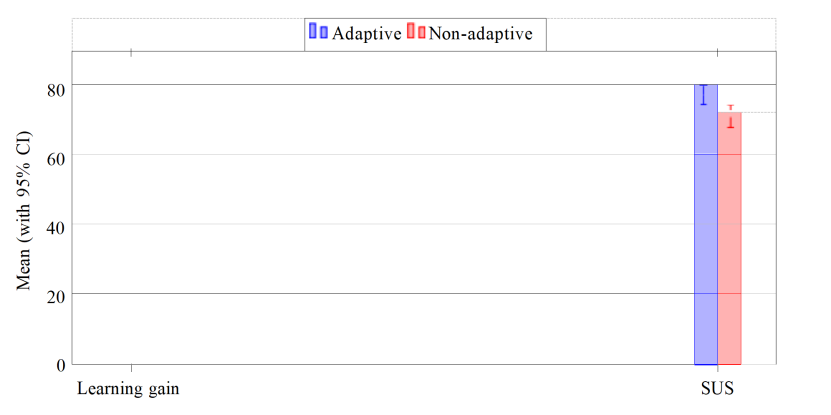
This study gives the design and assessment model of a multimodal, emotion-adaptive virtual learning environment (VLE). The system combines gaze, facial affect, and inertial gesture streams to facilitate effective inference of the learner states by mapping multimodal features to discrete and dimensional emotion representations. A dynamic adaptation policy can adjust the pace and feedback style and task difficulty dynamically to respond to changes in engagement, frustration, boredom or overload. In addition to the technical design, the framework focuses on transparency in terms of calibrated probabilities, guardrails, and finite-state logic, which allow interpretable relationships between recognition and pedagogical action. Effectiveness is measured by a controlled experiment that compares adaptive VLE to a non-adaptive control group that has the same content and interface. The main outputs consist of learning, task completion, and efficiency; workload, affective self-reports, and usability are measured as the secondary outputs. The evaluation strategy places reproducibility as a top priority through preregistration of results, power analysis and confidence interval reporting of the effect sizes. The combination of the study brings a modular and experientable plan to feel the inclusion of affective computing into VLEs and enhance the results of learning and user experience with timely and emotion-conscious interventions when considering limitations of sensor resilience, generality, and equity.
Show more
Read Article PDF
Cite
Research Article Open Access
Control System Dysfunction in Attention-Deficit/Hyperactivity Disorder: Exploring Negative Feedback Regulation Failure from a Cognitive Neuromodulation Perspective
Attention-Deficit/Hyperactivity Disorder (ADHD) is a prevalent neurodevelopmental disorder characterized by persistent patterns of inattention, impulsivity, and hyperactivity.Traditional approaches have focused on the neurotransmitter imbalance, particularly the dysfunction of the dopaminergic and noradrenergic system. However, these accounts often fail to capture the dynamic regulation of behavior in real-world contexts. This paper applies control system theory to conceptualize ADHD as a disorder of negative feedback regulation failure. Within this framework, behavior is understood as an attempt to minimize discrepancies between internal reference signals and perceived input. In ADHD, impaired neuromodulation disrupts the stability of this feedback loop, leading to deficits in sustained attention, error monitoring, and goal maintenance. The evidence from cognitive neuroscience suggests that the prefrontal cortex, anterior cingulate cortex, and frontostriatal circuits are all involved in some degree in the disorder, these regions are thought to have a role in controlling and regulating the disorder.By reframing ADhD through the lens of control theory, this study provides an integrative model of cognitive and motivational dysregulation. It highlights the clinical potential of interventions targeting feedback stabilization, such as neuromodulation, adaptive feedback systems, and cognitive training.
Show more
Read Article PDF
Cite
Research Article Open Access
The Role of Educational Leadership in Shaping Inclusive Practices
Educational leadership styles are how administrators manage schools, for instance, transformational, instructional, or distributive leadership that assists in building inclusive practices. Such practices offer equitable access and maximum participation in learning for all students regardless of disability, language ability, cultural context, or family wealth. To achieve this, educational leaders must implement systematized solutions, for instance, evidence-based policies, i.e., embracing models such as the US Individuals with Disabilities Education Act (IDEA) or culturally responsive special education laws, and developing strong community support systems through long-term family engagement and local collaborations. All these strategies enable collaborative environments in which various groups of learners, like students with disabilities, multilingual learners, and immigrant students, can be well-nurtured. This article aims to investigate how specific leadership styles immediately impact implementing inclusive practice, hence addressing a critical knowledge lacuna regarding how leadership affects systemic inclusivity. Its unique contribution is exploring cross-cultural policy impacts and proposing an effective, sustainable, equity-focused school reform model.
Show more
Read Article PDF
Cite
Research Article Open Access
Research on Immersive Virtual Reality Music Therapy in Interaction Mechanisms Psychological Effects and Cross-Domain Applications
Article thumbnail
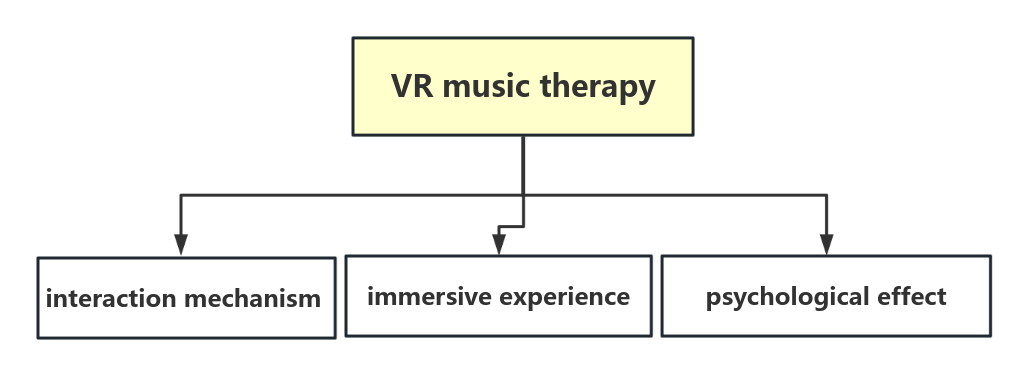
With the increasing prevalence of mental health disorders such as depression and anxiety, exploring innovative and interdisciplinary interventions has become a pressing public health need. Music therapy has long been recognized as an effective method for emotion regulation, and the rapid development of virtual reality (VR) technology has revitalized it. This study integrates interaction theory, presence theory, and flow theory to construct a theoretical framework of "interaction mechanism-immersive experience-psychological effects." Drawing on theoretical analysis and research from the medical, educational, and cultural and social fields, this study explores how the interaction mechanisms in VR environments enhance the therapeutic potential of music. Results indicate that immersive VR music therapy can enhance emotion regulation, reduce anxiety and depression, and improve individual-level self-efficacy. VR music therapy also has important implications in educational settings and at the cultural and social levels. While these results are encouraging, they remain limited, including reliance on small-scale pilot studies and insufficient validation of long-term effects. Future research should prioritize large-scale longitudinal studies.
Show more
Read Article PDF
Cite
Research Article Open Access
The Influence and Mechanism of Parental Parenting Styles on University Students' Career Exploration: A Review
In recent years, graduate employment issues have drawn considerable attention, with graduates exhibiting concentrated career choice tendencies and a lack of proactive exploration of alternative career paths, making it difficult to formulate career plans suited to their individual characteristics. This paper reviews literature from the past five years to examine the impact of parental parenting styles on university students' career exploration and its underlying mechanisms, aiming to provide scientific and targeted references for optimising employment guidance in higher education institutions and improving parenting approaches within families. Research indicates that authoritative parenting, through emotional support and rational guidance, significantly enhances self-efficacy in career decision-making and psychological capital, thereby promoting depth of career exploration and clarity of planning. Authoritarian parenting, however, presents complexities: excessive interference may lead to disengagement from exploration goals and diminished autonomy, though negative impacts may be mitigated in specific cultural contexts or when parental and child objectives align. Permissive parenting, lacking normative guidance, leads to ambiguous exploration directions and insufficient persistence in exploratory behaviour; neglectful parenting, due to the absence of resources and emotional support, inhibits both the willingness and capacity for exploration. The underlying mechanisms primarily involve three pathways.First, the mediating role of career decision self-efficacy; second, the interactive effect between psychological capital and family SES; third, the negative chain reaction of disengagement from exploration goals.
Show more
Read Article PDF
Cite
Research Article Open Access
An Exploration of "Super-National Treatment" for International Students in Chinese Universities: Implications for Educational Equity and Global Competitiveness
This paper examines the phenomenon of “Super-National Treatment” (SNT) for international students in China. SNT refers to policies and practices that provide international students with superior amenities, financial incentives, and academic accommodations compared to domestic students. While originally driven by goals of internationalization and soft power, SNT has become institutionalized, creating a clear divide in the student experience. The paper outlines its manifestations in admissions, housing, financial support, and academic assistance. It then analyzes root causes such as national policy ambitions, university ranking pressures, and economic incentives. It also discusses the negative consequences, such as eroding educational equity, fostering social isolation, and ultimately threatening the global competitiveness of Chinese universities. The paper concludes by calling for a paradigm shift toward “equal treatment for equal merit,” advocating integration over isolation.
Show more
Read Article PDF
Cite
Research Article Open Access
A Narrative Review of Mindfulness-Based Interventions for Women’s Mental Health
Social context, occupational demands, and life-stage transitions all shape women’s mental health. This mechanism-driven narrative review primarily examines how mindfulness-based interventions (MBIs) work for women by focusing on the underlying mechanisms they activate rather than the program “brands,” in other words, the type of the program. Specifically, this paper analyses evidence showing that training sustained attention and acceptance can enhance conflict monitoring and non-reactivity of stress-elicited thoughts and emotions, enabling the decentering/reperceiving of those thoughts and emotions—together with their associated bodily sensations and self-referential appraisals (e.g., self-criticism), and thus supporting better emotion regulation. This paper reveals how these connected processes are conditioned by context—including work/academic pressures and changing roles across the life stages—and identifies mechanisms that recur across settings and stages. This paper argues that care should be mechanism-led and context-based: practice needs to be paired with low-barrier supports that fit the individual’s life stage, which allow these mechanisms to align with women’s social identities and living conditions.
Show more
Read Article PDF
Cite