Articles in this Volume

Research Article Open Access
China's Conservatism and Its Impact on LGBT+ Teenagers
This research paper examines China's conservatism and its impact on LGBT+ teenagers, a group facing significant challenges due to the conservative attitudes towards LGBT+. The research analyzed the predicaments experienced by LGBT+ youths in China, encompassing instances of prejudice, disconnection from society, and familial disapproval. Furthermore, this study thoroughly examined the difficulties that LGBT+ teenagers in China confront, including discriminatory attitudes, social exclusion, and family disapproval. Additionally, the research delineated prospective measures for augmenting the mental health and general well-being of LGBT+ adolescents, such as family-focused interventions and community-based support initiatives. The study also provides practical suggestions for better policies and interventions to address their health and well-being. Overall, this investigation advances the understanding of the challenges faced by LGBT+ teenagers in China and underscores the importance of offering them adequate support and resources to enhance their quality of life.
Show more
Read Article PDF
Cite
Research Article Open Access
Is Saul Right That Lying Is No Worse than Misleading?
In the moral philosophy field, whether lying is not inferior to misleading remains a highly contested topic. However, current studies in the moral studies field have not applied the deliberative approach and evaluative approach to analyze whether lying is preferable than misleading. Typical philosophers like Jennifer Saul argue that lying is no worse than misleading. This paper, nonetheless, will critically examine her theory by applying the deliberative approach and evaluative approach since no previous study has done so, and by conducting ethical justification according to the essence of lying and misleading. Meanwhile, this paper will address that successful lying is not inferior to merely intentional misleading, while misleading is superior to lying in exceptional situations, and that lying is inferior to mere attempted misleading, and successful lying is morally inferior to intended misleading.
Show more
Read Article PDF
Cite
Research Article Open Access
Reforms on the WTO Dispute Settlement System from the Perspective of the Appellate Body
With the deepening of the trade distribution between great powers, such as the US-China trade war, there are a lot of problems with the system of the WTO. The WTO should be reformed to address these problems. This paper specifies the reforms of the WTO Dispute Settlement System from the perspective of the Appellate Body. It expounds on the background of the suspension of the Appellate Body, the US's claims on the Appellate Body, and the necessity to function the Appellate Body. Finally, several measures to reform the Appellate Body, such as establishing the compliance committee and the vote selection system, monetary compensation, and recovering credibility, are put forward in this paper.
Show more
Read Article PDF
Cite
Research Article Open Access
International Law and Institutions in Helping Resolve Tensions between Great Powers
This paper aims to provide a variety of methods to help solve tensions between great powers by using international law and institutions. It is widely acknowledged that many global tensions between great powers will significantly influence the whole world and must be solved instantly. We still know little about resolving tensions by using international law and institutions. By analyzing current global events and the functions of international institutions like the WTO and the UN Security Council, the paper points out the flaws in international organizations and the need for improvements. The article also views the significance of states as a middle power to resolve tensions. This paper presents an important message that there are plenty of weaknesses in the international system; the conflicts between great power would be dealt with more efficiently and effectively if international institutions and international law made some refinements.
Show more
Read Article PDF
Cite
Research Article Open Access
How Should The United Nations Security Council be Reformed to Better Ensure International Peace and Security?
Concerning its original mandates and with consideration to its original aims, the United Nations Security Council has largely failed to fulfill its duty and hence has become ineffective. According to the two "timeless procedural obstacles": veto and membership concluded by Weiss, the permanent members are abusing their veto privilege, rendering the UNSC ineffective, while the current geopolitical landscape of the current and future world is not represented within the Council, which was established and fixed since 1945. Both problems are increasingly relevant in our multipolar, globalized 21st Century world. Based on these two main factors, the Security Council has been unable to effectively accomplish its paramount duty of maintaining international peace and security. Problems exposed by the Security Council desperately need practical, persistent, and immediate solutions and reforms as the world tries its best to prevent tensions from developing into regional and global conflicts. However, the future of the Security Council represents a gloomy picture. Unfortunately, proposals that can be potentially adopted will not effectively address the underlying problems, and recommendations aimed at addressing these problems are not likely to pass the legal barriers outlined in the United Nations Charter. Reforming the Security Council is a long and winding road. With the current level of global consensus, it won't be easy to see the United Nations Security Council reformed and reconstructed.
Show more
Read Article PDF
Cite
Research Article Open Access
The Relationship Between Teenagers’ Sleep Length and Short-term Visual Memory
Article thumbnail
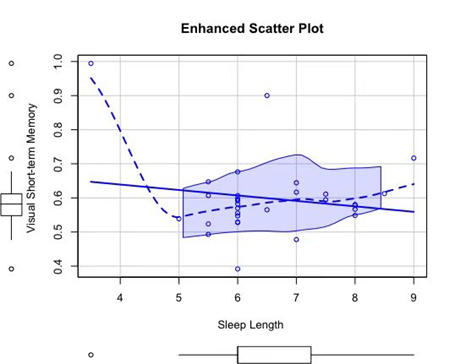
Sleep is an essential factor that influences people’s regular life. People sometimes feel frustrated in their work or studies the next day when they did not sleep well the night before. It is an issue bothering people, and therefore, finding out the principles of how sleep affects body regulation is significant work scientists nowadays are doing. Studies have shown the potential relationship between sleep, memory, and cognitive functions. This paper aims to find the possible relationship between sleep length and cognitive functions, specifically visual short-term memory. In this research, the author designed a visual-short-term-memory test to identify the impact of sleep length on adolescents aged between 16 to 18 years old’s memory performances. The participants showed their degree of short-term visual memory by identifying emotions and locations of faces on the screen that appears in only 15ms. The test results showed that sleep length and participants' visual short-term memory is related but not significant, and the relationship between sleep length and recognition of each emotion is not substantial.
Show more
Read Article PDF
Cite
Research Article Open Access
Prospective Memory and Sleep Quality
The objective of this study is to investigate the relationship between sleep quality and prospective memory in young adults. This investigation involved 115 cognitively healthy young adults aged between 17-28 years. Through scanning the QR code, participants completed two kinds of online questionnaires , including the Comprehensive Assessment of Prospective Memory (CAPM) and the Pittsburgh Sleep Quality Index (PSQI). The author used the One-Sample Kolmogorov-Smirnov test and the independent samples t-test to examine the correlation between the average CAPM score and PSQI score. The study reveals that changes of sleep quality strongly affect prospective memory. There is a direct correlation between the two, i.e., the worse the sleep quality, the poorer the prospective memory. Those with PSQI score ≤ 5 had significantly lower prospective memory scores than those with PSQI score > 6. This work also aims to tests the reliability of measuring tools, thereby to provide a reference for the filed of neuroscience research.
Show more
Read Article PDF
Cite
Research Article Open Access
A Literature Review on Social and Cultural Factors That Increase the Likelihood of Mental Illness Development in Developing Countries
Mental health issues have been widely proven crucial for social and economic development and well-being, remaining a significant challenge for developing countries. This paper aims to explore and discuss a number of social and cultural factors that contribute to the prevalence of mental illnesses in developing countries, including low social and economic status and low income, high unemployment and emigration levels, poorly developed mental healthcare system, high birth rate and fertility rate, high dependence on primary industry, low educational level, and stereotypes within society. Mechanisms of the above key risk factors are evaluated. This paper can be used to understand the current obstacles for developing countries to improve citizens’ mental well-being and livelihood and provide information for further interventions and policies to address mental health issues.
Show more
Read Article PDF
Cite
Research Article Open Access
Obedience and Authoritarian Parenting Style in China
Article thumbnail
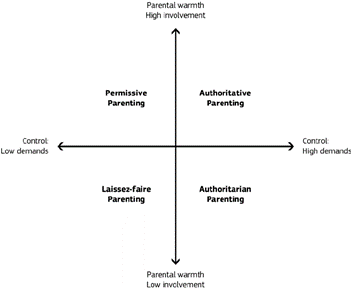
The chief aim of this paper is to explore the relationship between authoritarian parenting style and obedience among the middle class of mainland China, meanwhile determining the effect of self-esteem as an intermediate between two variables. We will replicate the Milgram experiment on obedience in this study with a few altered conditions and the self-esteem questionnaire that Rosenberg developed. Derived from results presented in former research, our study suggests that there exists a correlation between authoritarian parenting style and obedience. Additionally, both variables have a significant relationship with self-esteem.
Show more
Read Article PDF
Cite
Research Article Open Access
Efforts Made by International Organizations in Facing Challenges to International Governance--Regulating Armed Conflict by the United Nations and Regional Organizations
This paper will discuss the challenges that international organizations face in global governance. The contents will be divided into three parts. The first part will define global governance, and then explain the challenges that scholars believe will be faced in realizing global governance. The second part will introduce international organizations, divided into the United Nations and regional organizations, and will focus on the various organizations of the United Nations. Finally, the third part will analyze the Syrian civil war in combination with the previous part. The content of this article will focus on intervention in armed conflict.
Show more
Read Article PDF
Cite